

It's Wednesday, September 30th. OpenAI's dots keep working after you close ChatGPT, on their own cloud computers. Manus 2.0 adds event-triggered automations, and its new Cue app opens limited early access for agents with their own phone number and inbox. Open roles below.

In Today’s Top Tools, we spotlight some of the most innovative, creative AI apps that we recommend adding to your stack.
TOOL SPOTLIGHT
1️⃣ Your ChatGPT Dot Keeps Working After You Close The Tab
Image from OpenAI
Dots are always-on agents inside ChatGPT. Each one runs on GPT-6 Astra with its own cloud computer, connects to more than 4,000 apps, and keeps working on your goals when you are not in the chat. The first dot comes free with Pro and Business Premium.
OpenAI introduced dots at DevDay on September 29: an agent you set up once and reach through ChatGPT, Slack, Teams, or a voice call. It runs on GPT-6 Astra and messages you when it needs a decision.
Hand it a standing goal, such as watching customer feedback and shipping small fixes, and it keeps running that loop without a new prompt.
Connect your inbox, calendar, and files from a library of more than 4,000 apps, then set a rule per action: act, act if pre-approved, ask, or hand off.
Open its cloud computer at any point to watch, step in, or pause it; the desktop app can also let a dot drive your own laptop, off by default.
Rolling out now to Pro (from $100 a month) and Business Premium with the first dot included; create it on desktop, Enterprise admins switch on the beta, and Pro users in the EEA, Switzerland, and the UK wait.
Standing access is the product, so decide how much to give a dot before you connect your apps. A dot runs proactive research across everything you connect and forms memories from what it reads, even when you never asked it anything. Disconnecting an app later does not erase what it already learned; only deleting the dot does. Start with one workflow, set its action rule to ask first, and watch the Activity View for a week before it gets more. OpenAI has not priced usage past the first month, so treat the dot included with your plan as a trial and log what it can reach and what it did.
TOOL SPOTLIGHT
2️⃣ Manus 2.0 And Cue Give Your Agent Its Own Phone Line
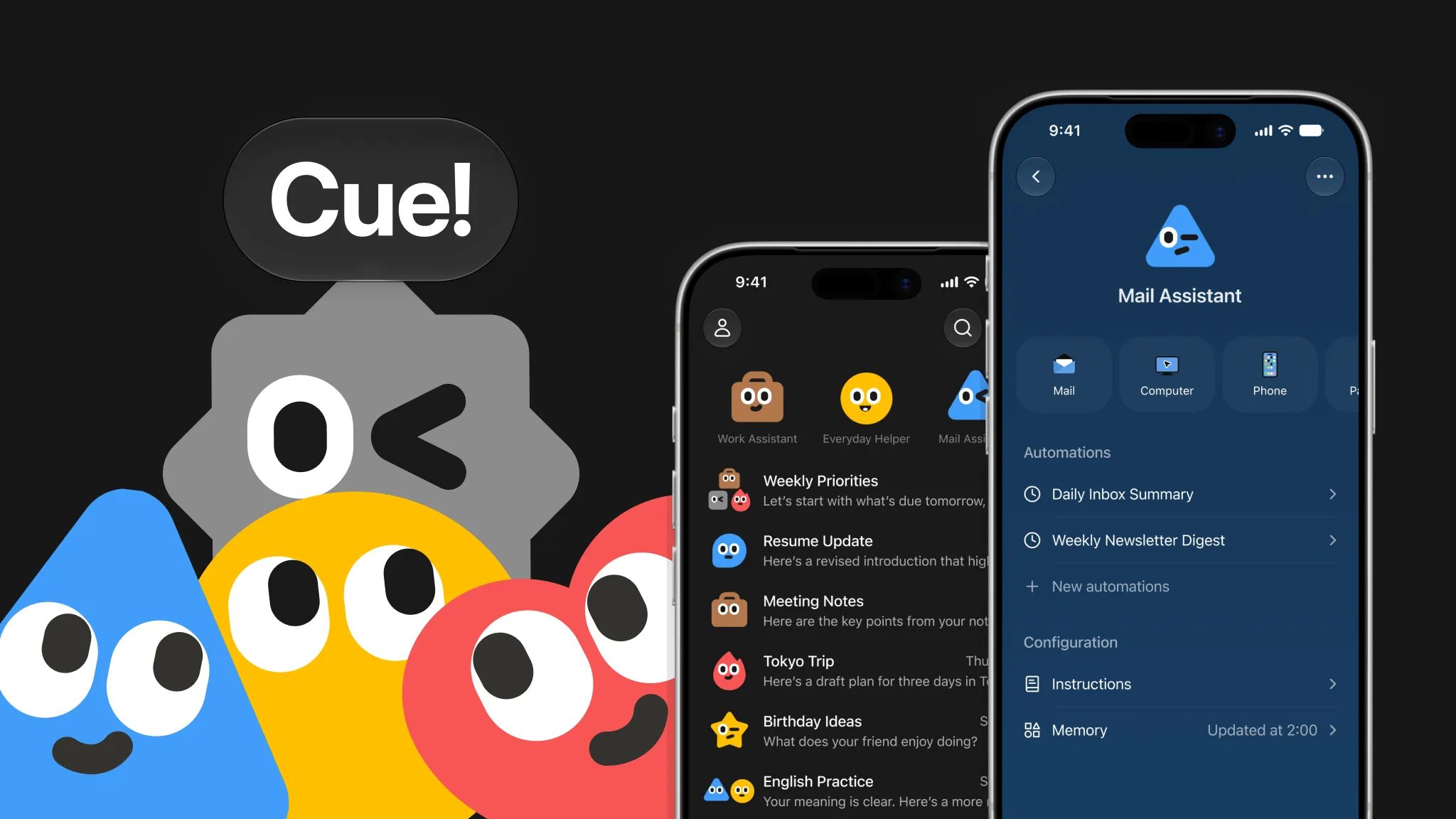
Image from Manus
Manus 2.0 rebuilds the agent platform around event-triggered Automations, always-on Cloud Computers, and a desktop Studio with a real video timeline. Cue, a new app from the same company, gives each agent its own email, phone number, wallet, and computer. Both launched September 28; Cue is in early access.
Manus shipped Manus 2.0 and Cue on September 28. Cascade, its new harness, loads tools only when a task needs them. Cue gives each agent its own email and phone number, so it can take calls and leave you a summary.
Set an Automation to run when a lead email arrives; other triggers include a Slack message, a calendar event, an ad-performance change, or a Notion update.
Let Studio cut a 30 to 60 second product ad, then swap the song or drop in your own footage on a real timeline instead of re-prompting.
Hand a Cue agent a budget and a routine (book the table, hold the DMV slot, watch for the ticket drop) and let it take the call and pay with its own wallet.
Manus 2.0 is live on web, desktop, and mobile at $20, $40, or $200 a month plus $30 to $50 for a Cloud Computer; Cue is free in early access with invite code MEETCUE, and iOS waits on App Store review.
Treat a Cue agent like a new hire with a company card and a phone line. Give it one routine, limit its access, and require approval before it pays or touches anything sensitive. Its own inbox means strangers can reach it directly, so decide what an incoming message is allowed to trigger before you switch on a routine. The bills are separate too: Manus charges for Cloud Computers apart from the plan and deletes their files if the subscription lapses, and Cue's price after early access is undisclosed. Build the exit plan before you depend on its phone number or its files.
🔥 What 120 Chapters Are Building Through October 31
You just read about two tools. Here is somewhere to point them. Hack for Humanity is four weeks in, with 120 AIC chapters in 50 countries building through October 31. Each chapter picked its own problems, drawn from what 250,000 people named during Humans in AI Week in June: job displacement, technical literacy, accessibility. No sponsor brief, no product to validate, no predetermined answer. MLH, Google, Lovable, Snowflake, and Databricks are backing the builds without steering them. Find one happening near you or start one in your city.

🎓AIC AUTOMATIONS
🦁 Personal Agents Are Here. Mine Plans My Days.
I used to spend the first hour of every morning deciding what to do. Now I make that decision before bed.
I send my personal agent three priorities. It turns them into dated tasks, finds time for them on my calendar, and reminds me at 8:30 the next morning. I wake up with my day already decided.
Here is the exact system, plus the template and prompt I use.
Why now
Personal agents are becoming the next AI battleground. OpenAI announced Dots, Manus launched Cue, and Meta introduced Muse. I use Instinct, a free, invite-only agent that can work across my tools and even make phone calls. After nearly two months of using Instinct, one workflow has become indispensable: planning tomorrow before I go to sleep.
How it works
I choose three priorities before bed.
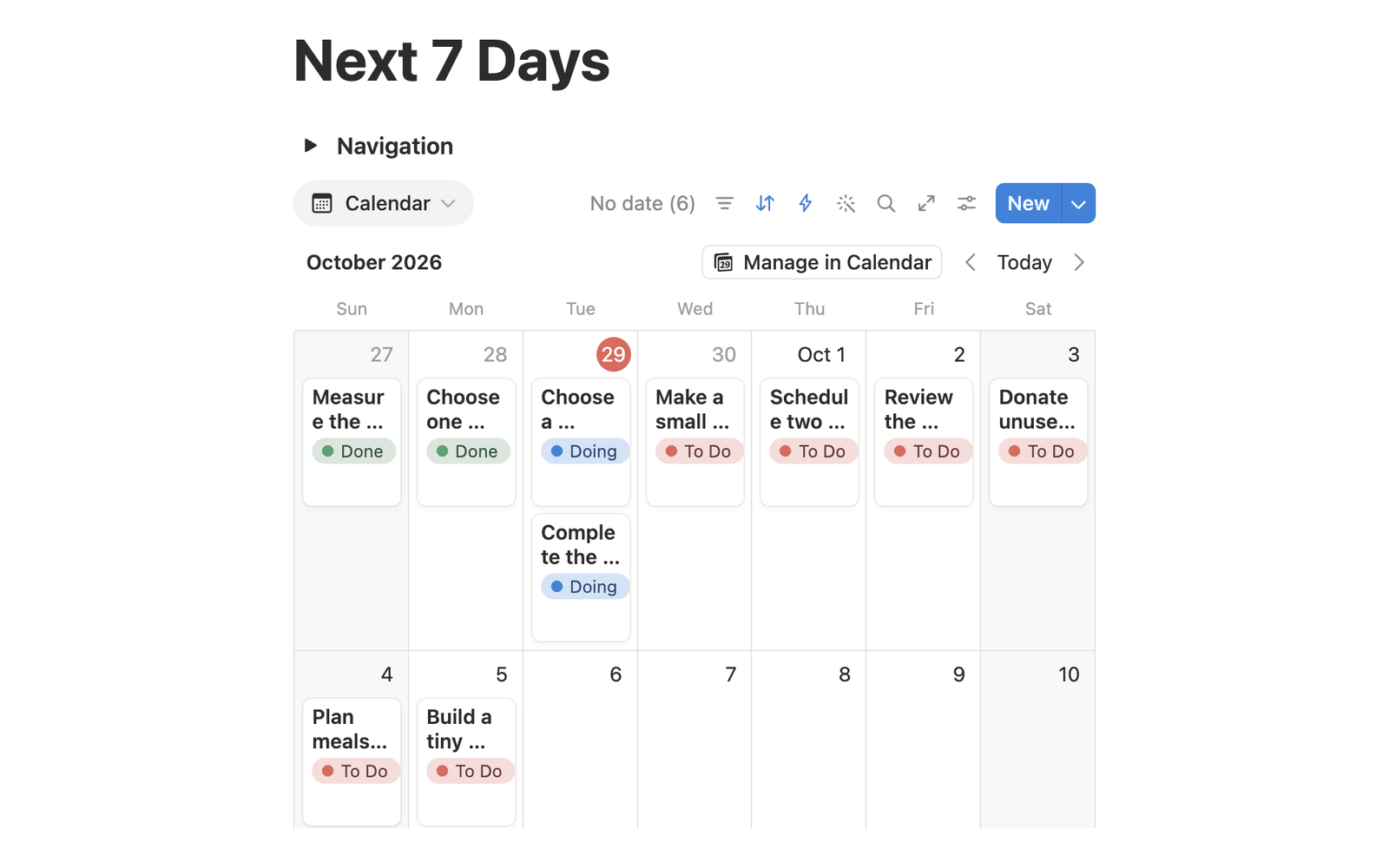
My agent adds them to Notion with due dates.
It finds open calendar slots and time-blocks them.
At 8:30 the next morning, it reminds me what matters.
Undated tasks stay in my Inbox. Links I want to revisit go into Read Later.
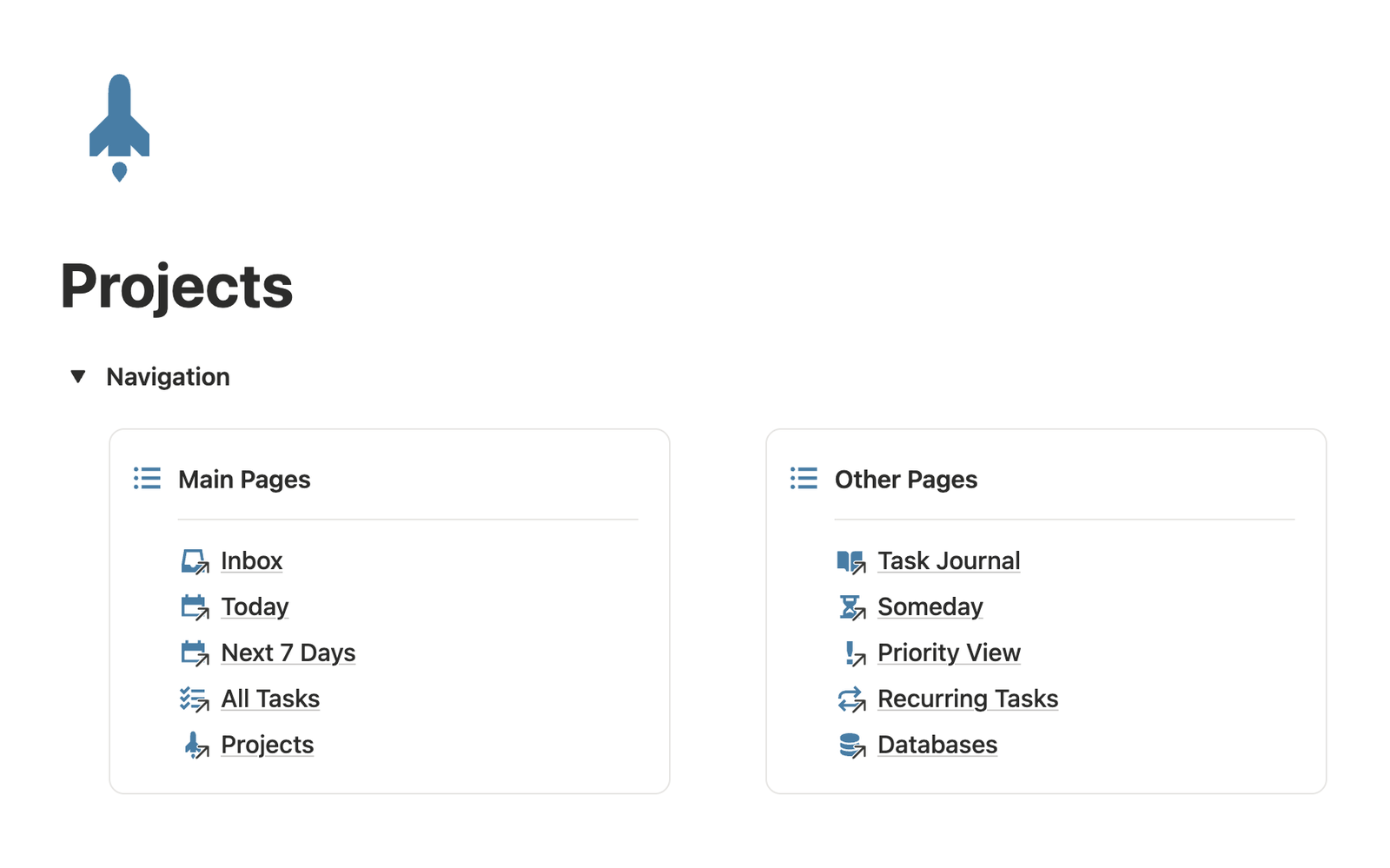
Copy my system
I made a clean copy of my real task system that you can duplicate: Ultimate Tasks Template.
It includes Tasks, Projects, Inbox, Calendar, Read Later, and a Goals section. Duplicate it, connect your agent, and start with the three-priority routine. (Full credit: my system began with Thomas Frank's Ultimate Tasks, which I adapted over time.)
Set it up tonight
Duplicate the template.
Share it with your personal agent and connect the calendar you want it to use. Start with limited access and review its changes until you trust the workflow.
Send tomorrow's three priorities. Include how long each might take or how much focus it requires.
Copy this prompt
Here is the link to my ultimate task management system: [paste your Notion link]. Use it as the database for all tasks I give you. Make this a routine so I do not have to remind you how to do it.
Here are my three priorities for tomorrow:
[Priority]
[Priority]
[Priority]
Add each one to my Notion task database with tomorrow’s date. Review my calendar and schedule each task with a start and end time based on the focus it requires. Do not move existing events. Each evening, ask me for my priorities for the next day so we have the next day set up ahead of time. At 8:30 tomorrow morning, remind me of all three priorities.
You can use this workflow with Instinct, Muse, Hermes, or another capable personal agent. Your system can live in Google or Notion: whichever gives you better visibility.
The actual win
I no longer spend the first hour of the morning deciding what the day should be. I make the decision the night before, in three sentences, and the plan is waiting when I wake up.
That is what a personal agent is for.
Duplicate the template and try it tonight.
P.S. I still have a few Instinct invite links. Email me if you’d like to try the agent :)
One way to put AI to work, every week.
From Joy Dong

In this section, we feature a few standout opportunities at leading AI companies, non-profits, policy groups, and other organizations.
🔬 Work at a Lab/AI Safety
Roles at frontier labs, safety organizations, and research institutions
RESEARCH ENGINEER / RESEARCH SCIENTIST, RL FRONTIERS - Anthropic | San Francisco / New York / Seattle | $500,000 - $850,000
RESEARCHER, AGENT SAFETY, TRAINING AND EVALUATIONS - OpenAI | San Francisco | $380K - $500K + Equity
RESEARCH, SAFETY - Thinking Machines Lab | San Francisco (Hybrid) | $350,000 - $475,000
MEMBER OF TECHNICAL STAFF, EMBEDDED ASSESSMENTS - METR | Berkeley | $402,048 - $687,759
FORWARD DEPLOYED RESEARCH SCIENTIST - Goodfire | San Francisco | $220,000 - $315,000
🚀 Work in Industry
Roles at funded AI startups and private companies
MACHINE LEARNING ENGINEER - Ramp | New York / Remote (US) | $200K - $330K + Equity
SOFTWARE ENGINEER, AGENT - HEALTHCARE - Sierra | New York / San Francisco | $180K - $390K + Equity
STAFF SOFTWARE ENGINEER, AGENT PRODUCT - Decagon | New York (On-site) | $200K - $400K + Equity
PRODUCT MANAGER, AI CAPABILITIES - Perplexity | San Francisco / New York | $230K - $330K + Equity
MACHINE LEARNING ENGINEER, SEARCH QUALITY - Glean | San Francisco | $140,000 - $265,000
🏛️ Work in AI Policy / Governance
Roles in government, think tanks, NGOs, and policy organizations
VICE PRESIDENT OF STATE GOVERNMENT AFFAIRS - Americans for Responsible Innovation | Washington, DC | $300,000 - $350,000
NATIONAL SECURITY APPLICATIONS OF AI RESEARCH LEAD - Georgetown CSET | United States (no relocation) | $160K - $190K
POLICY DIRECTOR - CivAI | Berkeley, CA or Washington, DC | $180,000 - $240,000
(SENIOR) RESEARCHER, MISUSE RISKS - Safe AI Forum | Bay Area / New York / Remote (US or UK) | $122,052 - $172,056 (US)
✨AIC OPPORTUNITIES
Current ways to build with The AI Collective.
DIRECTOR OF SF BAY AREA PROGRAMS - The AI Collective | SF Bay Area, in-person for events | Full-time, paid | $60,000-$80,000
EDUCATION OPERATIONS LEAD - The AI Collective | Remote | Volunteer | 5-10 hours a week
EXECUTIVE ASSISTANT - The AI Collective | Remote, LatAm preferred, PST hours | $1,500 a month
PARTNERSHIPS LEAD, GRANTS - The AI Collective | Remote | Volunteer, part-time | ~5-7 hours a week
🫵 Want your message in front of 200,000 AI builders?
Our partners and sponsors get exclusive placements across the newsletter and access to AIC's in-person network — demo nights, dinners, hackathons, and forums across 180+ chapters.
For all inquiries, send us a note at [email protected].
The AI Collective is built by volunteers across 180+ chapters in 40 countries.
Thank you to the thousands of volunteers around the world who make this work possible. We truly could not do this without you.
🧑💻 About the Editors

About Noah Frank
Noah is a researcher, innovation strategist, and ex-founder thinking and writing about the future of AI and the workforce. His work and body of research explores the economics of emerging technology and organizational strategy. Outside of AIC, Noah heads research for Centaurian AI.


About Lindsay Gross
Lindsay is an AI engineer, researcher, and writer focused on how AI systems behave in practice and what it takes to make them safe. Her work sits at the intersection of AI safety, governance, and product design, and at AIC she writes about the questions that matter most as these systems scale.