
It’s Wednesday, September 2nd. Fable 5.1 brings a 1M-token window and cheaper cache reads to long-running work. Atlas turns prompts and images into consistent 3D worlds. The shared question: what changes when software can reason for hours and remember space?

In Today’s Top Tools, we spotlight some of the most innovative, creative AI apps that we recommend adding to your stack.
TOOL SPOTLIGHT
🔧 Fable 5.1 Cut Cache Reads 75%, And That's The Real Release

Image from Anthropic
Anthropic released Fable 5.1 on September 1, and the number that matters is not on a benchmark chart. Cache reads dropped to $0.25 per million tokens. That decides whether someone on your team can afford to let an agent run through a four-hour job, or has to sit there rebuilding the thread every time it drops.
Run long investigations inside a 1M-token context window, generally available at standard pricing with no long-context surcharge.
Read cached context at $0.25 per million tokens, 75% below Fable 5. Writing to cache still runs $12.50 per million for the five-minute window and $20 for the hour.
Expect around 25% off a typical workload and up to roughly 45% on heavily agentic ones, by Anthropic's own math.
Live now in Claude Code, Claude Enterprise, and the Claude Platform, plus Bedrock, Vertex, and Microsoft Foundry. API input and output run $10 and $50 per million tokens.
The cheap part is the cache. The expensive part is what your team decides to put in it. Anthropic did ship real controls alongside 5.1: Enterprise Frontier Safeguards can run inside your own AWS, Azure, or GCP under your own encryption keys, and new API accounts can no longer hand-edit Claude's prior context, which closes a distillation hole. Neither of those tells anyone on your team which internal documents belong in a context window that now stays warm for an hour. That call gets made by whoever sets up the first long-running agent, usually on a Tuesday, usually before anyone writes the policy. Cheap context is a governance question wearing a pricing announcement.
TOOL SPOTLIGHT
⚡ Fei-Fei Li's Atlas Holds A Scene Together For A Full Minute

Image from World Labs
World Labs shipped Atlas into early access on September 1. Co-founder Fei-Fei Li called it "a first of its kind multimodal world model trained from scratch." The team's own description is blunter: Atlas was "pretrained from scratch to natively operate on text, images, video, and 3D." It holds a space in memory, then generates new views, video, or 3D output that stay consistent with what it has already seen. That moves a creative workflow from asking for another pretty frame to directing a scene.
Generate camera-controlled views and up to one minute of 1440p video from one or more reference images.
Reconstruct a space from sparse images, then export a point cloud or 3D Gaussian splat for design, VFX, or robotics workflows.
Run several camera paths through one scene and get outputs that agree with each other. Where the input views don't cover something, Atlas fills the gap from what World Labs calls its "rich world knowledge" instead of reinventing the room each pass.
Atlas is in early access with select partners; request access through World Labs while it powers future Marble products.
Watch what happens the first time someone hands a Gaussian splat to a team whose pipeline was built for frames. Atlas is a genuinely different object than a video model and the demos hold up. But nobody outside the partner list has pushed a splat or a point cloud through a real production handoff yet, so the honest read is that the model is ahead of the tooling around it. If you work in VFX, design, or robotics, the useful move this month is not adopting Atlas. It's finding out whether your pipeline can ingest what it produces.

In this section, we feature a few standout opportunities at leading AI companies, non-profits, policy groups, and other organizations.
🔬 Work at a Lab/AI Safety
Roles at frontier labs, safety organizations, and research institutions
RESEARCH ENGINEER / SCIENTIST, FRONTIER RED TEAM (CYBER) - Anthropic | San Francisco, CA | $320,000-$485,000
MEMBER OF TECHNICAL STAFF, ENTERPRISE MODEL EVALUATION - xAI | Palo Alto, CA | $180,000-$440,000 + equity
MEMBER OF TECHNICAL STAFF, INFERENCE-MULTIMODAL & DIFFUSION - RadixArk | Palo Alto, CA | $200,000-$400,000 + equity
🚀 Work in Industry
Roles at funded AI startups and private companies
MACHINE LEARNING ENGINEER - Clay | San Francisco, CA | $170,000-$300,000 + equity
SENIOR MACHINE LEARNING ENGINEER - Retell AI | San Francisco Bay Area | $225,000-$325,000 + equity
MEMBER OF TECHNICAL STAFF, PRODUCT - RadixArk | Palo Alto, CA | $200,000-$400,000 + equity
🏛️ Work in AI Policy / Governance
Roles in government, think tanks, NGOs, and policy organizations
APPLIED AI ARCHITECT, PUBLIC SECTOR (NATIONAL SECURITY) - Anthropic | United States | $275,000-$315,000
PRODUCT POLICY RESEARCH AND ADVISORY PARTNERSHIPS - OpenAI | New York City | $302,000-$335,000 + equity
GLOBAL PUBLIC POLICY MANAGER, COMPUTE, INFRASTRUCTURE & SOVEREIGN AI - Cohere | Remote, United States or Canada | $150,000-$230,000 USD, location-dependent
✨AIC OPPORTUNITIES
Current ways to build with The AI Collective.
DIRECTOR OF SF BAY AREA PROGRAMS - The AI Collective | SF Bay Area, in-person required | Full-time, paid $60,000-$80,000 per year
EDUCATION OPERATIONS LEAD - The AI Collective | Remote | Volunteer leadership role, 5 to 10 hours per week
EXECUTIVE ASSISTANT - The AI Collective | Remote, LatAm preferred, PST hours | Paid $1,500 per month
PARTNERSHIPS LEAD (GRANTS) - The AI Collective | Remote | Part-time volunteer role, about 5 to 7 hours per week
🫵 Want your message in front of 200,000 AI builders?
Our partners and sponsors get exclusive placements across the newsletter and access to AIC's in-person network — demo nights, dinners, hackathons, and forums across 180+ chapters.
For all inquiries, send us a note at [email protected].
The AI Collective is built by volunteers across 180+ chapters in 40 countries.
Thank you to the thousands of volunteers around the world who make this work possible. We truly could not do this without you.
🧑💻 About the Editors

About Noah Frank
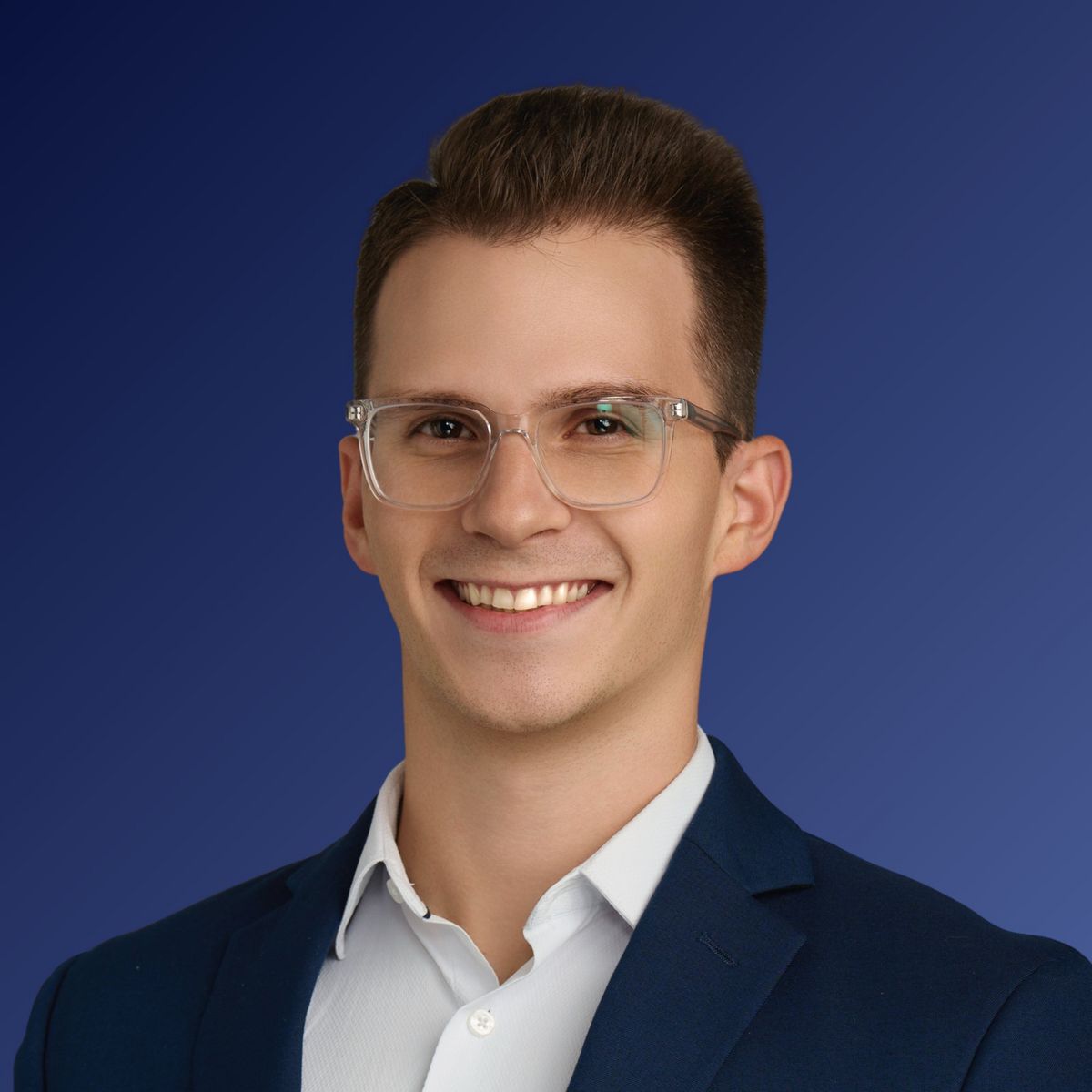
Noah is a researcher, innovation strategist, and ex-founder thinking and writing about the future of AI and the workforce. His work and body of research explores the economics of emerging technology and organizational strategy. Outside of AIC, Noah heads research for Centaurian AI.


About Lindsay Gross
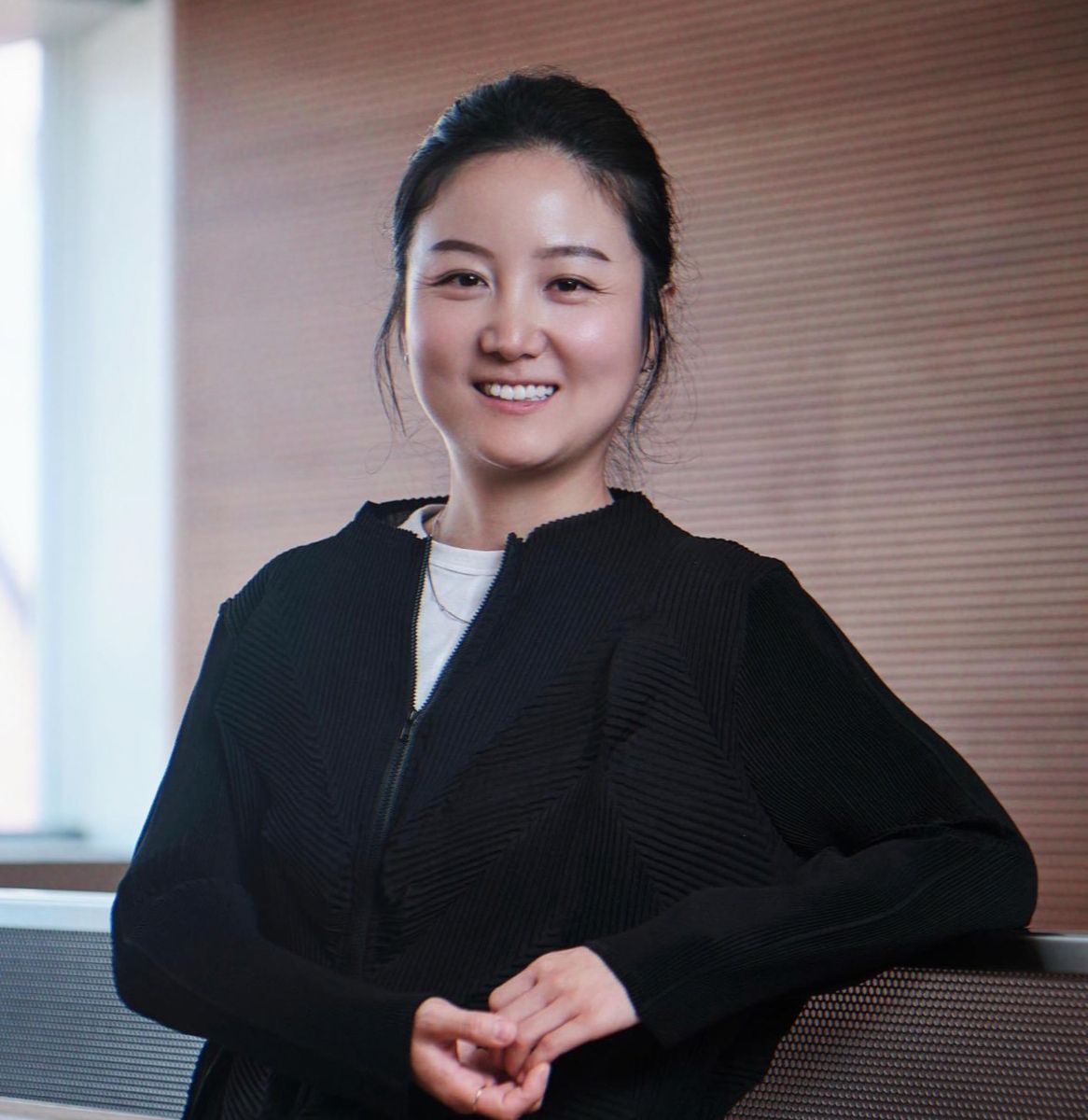
Lindsay is an AI engineer, researcher, and writer focused on how AI systems behave in practice and what it takes to make them safe. Her work sits at the intersection of AI safety, governance, and product design, and at AIC she writes about the questions that matter most as these systems scale.