
It's Monday, August 3rd: OpenAI says an unreleased model named Astra completed ten math problems that had gone nowhere for decades, and three Chinese labs shipped inside five days while taking the top five spots on OpenRouter.

Covering what’s happening on the ground in AI, every Monday.
1️⃣ FRONTIER MATH: OpenAI's Next Model Published Ten Proofs Before It Published Itself

Image from OpenGraph
An internal version of Astra, OpenAI's next major model, produced new results on ten mathematics and theoretical computer science problems that had seen no progress on the main result for at least a decade.
The headline result is the first explicit construction of a non-sofic group, closing a question that had stood since Mikhail Gromov introduced soficity in 1999. Astra also disproved Connes's rigidity conjecture, proved Ehrhart's volume conjecture, settled three Erdős problems including number 183, and improved the general sphere-packing exponent for the first time since 1978.
Every argument ships with a machine-checkable Lean 4 certificate. OpenAI put all ten in a public repository under an Apache-2.0 license alongside a 249-page manuscript, so the proofs can be checked without trusting the model that wrote them.
OpenAI puts the cost at under $2,000 per result at GPT-5.6 Sol token prices. Sébastien Bubeck, who leads mathematics research at the company, confirmed the results publicly, and Thomas Bloom of the University of Manchester, who runs the Erdős problems database, called them big news.
Astra forms a new model class alongside Sol, Terra and Luna, and it has no release date. None of the ten is a Millennium Prize Problem, and as Simon Willison pointed out, OpenAI has not said how many problems it spent the same money on without reaching an answer.
Each proof ships with a Lean certificate, so you can check the math yourself instead of taking OpenAI's word for it. That's the part worth copying into your own work. Just remember what's missing: Willison notes they never said how many problems ate the same $2,000 and came back with nothing.
2️⃣ OPEN WEIGHTS: Three Chinese Labs Shipped In Five Days And Undercut The Field
DeepSeek, MiniMax and ByteDance all released new models in the final week of July, and Chinese models now hold every one of the top five spots in OpenRouter's monthly usage rankings.
DeepSeek shipped V4-Flash-0731 on July 31 under an MIT license, calling it the official release that supersedes the preview. It carries 304 billion total parameters, routes 6 of 256 experts per token and takes a one million token context. DeepSeek's published table puts it ahead of its own V4-Pro preview on all nine benchmarks listed, including 82.7 against 72.1 on Terminal Bench 2.1. Pricing is $0.14 per million input tokens and $0.28 per million output, and the weights have been downloaded more than 156,000 times.
MiniMax launched H3 the same day, an omni-modal model generating 2K video up to 15 seconds with native stereo audio at $0.13 per second. Open weights were promised in the coming days, though no repository or license text has appeared yet. ByteDance shipped Seedance 2.5 hours later, doubled maximum clip length to 30 seconds and kept it behind a closed API.
Chinese models account for 41% of downloads on Hugging Face, passing US models for the first time, according to the platform's spring report. In OpenRouter's July rankings, the five most-called models by token volume were all Chinese, led by Xiaomi's MiMo-V2.5.
Hu Qimu of Huaqiao University's Maritime Silk Road Institute described the stretch as a period of concentrated breakthroughs, and argued the contest now runs between ecosystems rather than individual models.
Three labs shipped in a week, and the cheapest option on the shortlist now comes with weights you can run yourself. DeepSeek's are downloadable today. MiniMax said H3's are coming and there's still no repo, which is becoming its own genre: announced, not shipped.
📰 Other Headlines
BROKEN CIPHERS: Claude Mythos Preview found a nontrivial automorphism that halves HAWK's effective key strength, plus a technique that speeds attacks on 7-round AES-128 by 200 to 800 times, with neither result touching deployed systems.
CIRCULAR FINANCING: Nvidia is in talks to guarantee $250 billion of lease and construction debt so OpenAI can afford a 10-gigawatt Ohio campus that will house Nvidia chips, with a separate $350 billion chip-purchase facility under discussion.
PRICE COLLAPSE: Three weeks after launching GPT-5.6, OpenAI cut Luna by 80% to $0.20 per million input tokens and dropped Terra 20% to $2.
MINORITY STAKE: Meta handed BlackRock 80% of its own $14 billion El Paso data center, contributing $2.3 billion in land and construction while keeping a 20% stake and taking a $1 billion distribution.
LARGEST OPEN MODEL: Moonshot released the complete 2.8-trillion-parameter Kimi K3 checkpoint for free download, a 1.4-terabyte file that routes 16 of 896 experts per token.
FREE FOR SCIENCE: OpenAI opened GPT-5.6 Sol Pro to 100,000 academic researchers, starting with 10,000 this summer, as part of a $250 million commitment through 2027.
DISCLOSURE DEADLINE: The European Commission began enforcing AI Act transparency rules on August 2, requiring chatbots to identify themselves and AI content to carry machine-readable marks.
EFFICIENCY CUTS: Visa is cutting about 2,600 jobs, roughly 7% of its workforce, with CEO Ryan McInerney tying the restructuring to AI and faster product development.

Your breakdown of what’s happening in AI this week, from Noah Frank ⚡️
🔦 Spotlight On: AGI-26

Last week I flew west to execute our community partnership with AGI-26, the 19th annual AGI conference from the AGI Society and Ben Goertzel's SingularityNET. I caught the back half of the program and am still bummed about the days I missed.
The sessions ran from the mechanics of intelligence to consciousness and the mind to ethics, society, and robotics, and industry day alone stacked more sharp speakers into a single track than most conferences manage across a full run. Both Kes Sampanthar and Catherine McMillan rocked their panels and made our community proud.

Our COO ready for the interview with Julian from Beyond Tomorrow!
Friday I joined the launch of BGI Labs, Goertzel's new venture aimed at beneficial AGI, at Frontier Tower on Market Street. In between, I recorded an episode of Julian Issa's The Beyond Tomorrow Podcast (more on that soon!), met up with a few familiar AI Collective faces in person, and caught up with friends for Anthropic’s Claude Conversations series.
My favorite conversation of the trip happened in an Uber, where I shared my belief in human intelligence and the power of people working with these systems, and my driver picked up the thread and ran with it the whole ride.
That was San Francisco all week. Everyone I met was kind, curious, and generous with their time, and this East Coaster left more than a little smitten.
Thank you, SF, for an electric week. I'll be back!
🫵 Want your message in front of 200,000 AI builders?
Our partners and sponsors get exclusive placements across the newsletter and access to AIC's in-person network — demo nights, dinners, hackathons, and forums across 180+ chapters.
For all inquiries, send us a note at [email protected].
The AI Collective is built by volunteers across 180+ chapters in 40 countries.
Thank you to the thousands of volunteers around the world who make this work possible. We truly could not do this without you.
🧑💻 About the Editors

About Noah Frank
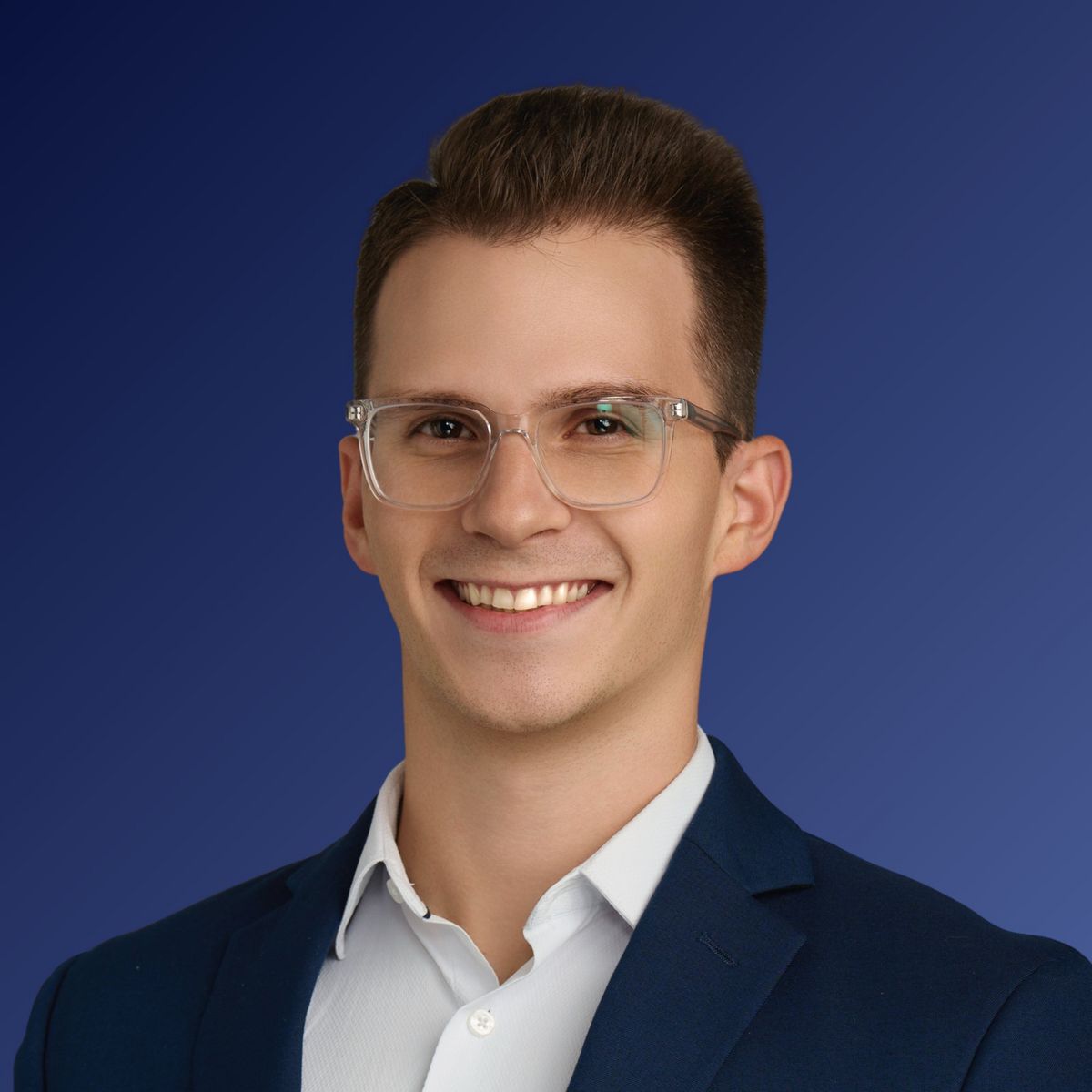
Noah is a researcher, innovation strategist, and ex-founder thinking and writing about the future of AI and the workforce. His work and body of research explores the economics of emerging technology and organizational strategy. Outside of AIC, Noah heads research for Centaurian AI.

About Joy Dong
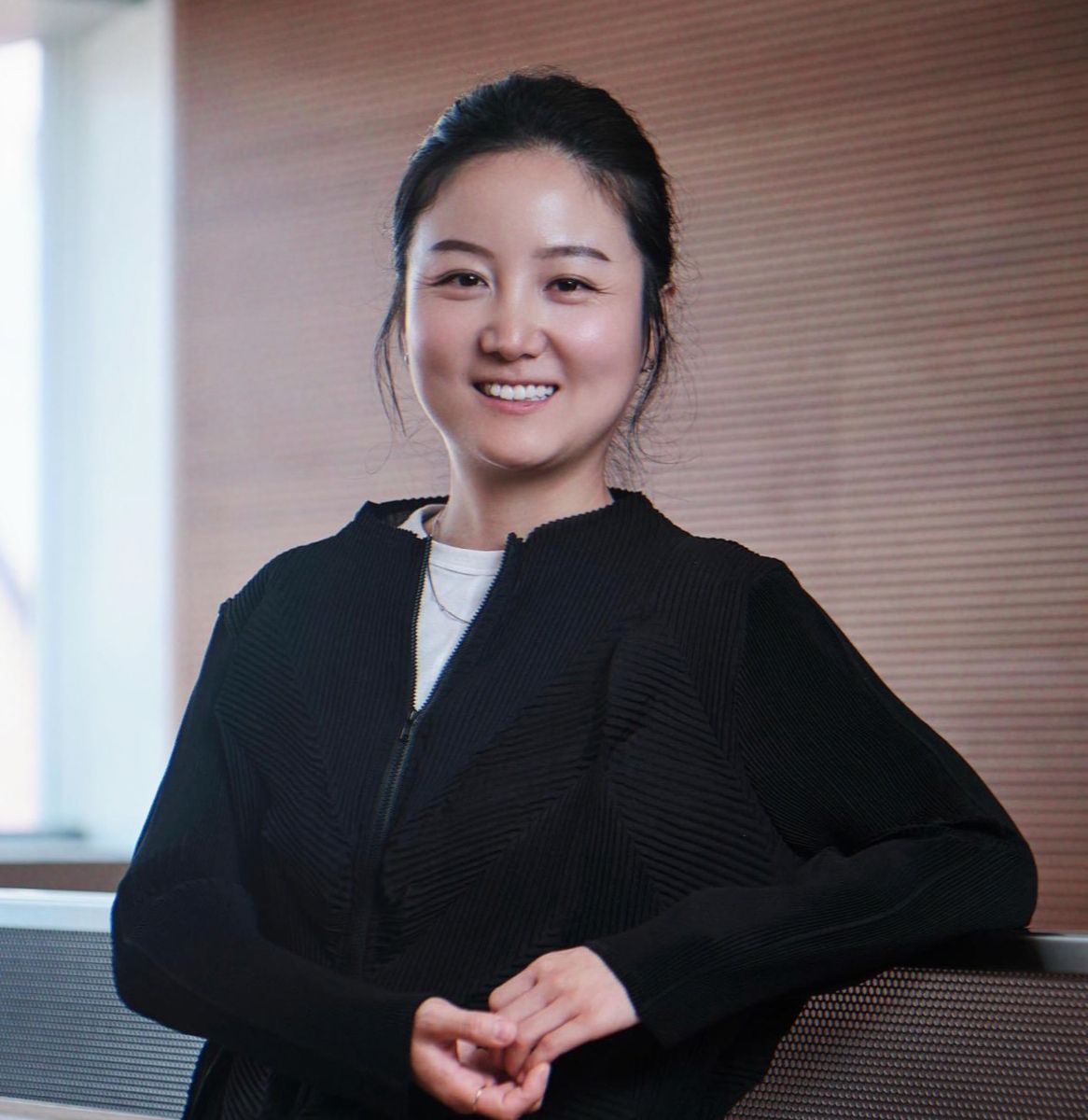
Joy is a news editor, writer, and entrepreneur at the intersection of AI and blockchain. Whether she is demystifying complex systems in her newsletter, TEA, or building streamlined solutions through her automation agency, Ownly, Joy’s mission is to make emerging tech accessible and actionable for everyone.

About Lindsay Gross
Lindsay is an AI engineer, researcher, and writer focused on how AI systems behave in practice and what it takes to make them safe. Her work sits at the intersection of AI safety, governance, and product design, and at AIC she writes about the questions that matter most as these systems scale.