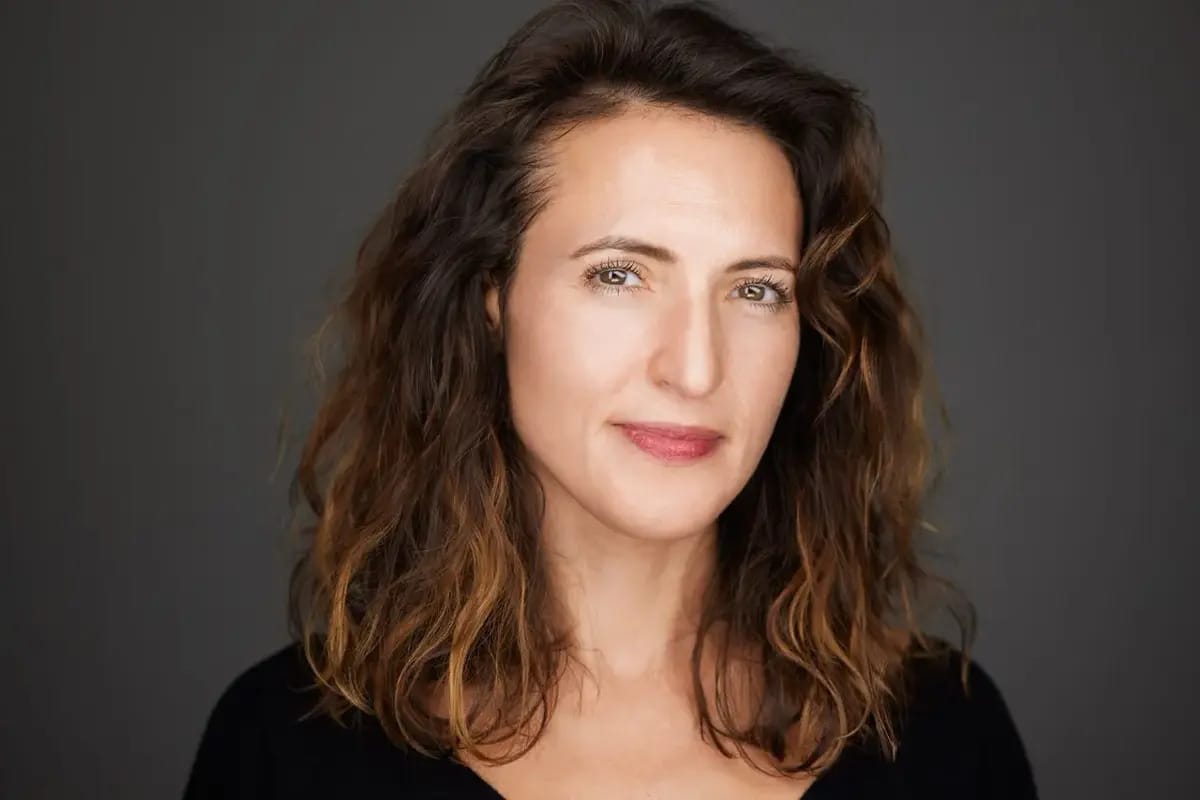

In “The Default State,” Oana Ruxandra argues that today’s shift toward AI-enabled creation is less a sudden “AI disruption” than a return to a much older human pattern: most people making, building, and trading across many skills rather than spending decades inside narrow roles. She traces how industrial-era specialization turned many people into consumers instead of makers, then uses data from music and entrepreneurship to show that dynamic reversing as the cost of creation and distribution collapses. Citing the rise of independent music revenue, sustained growth in new business formation, and increasing self-identification as “founders,” she frames AI as an accelerant that removes structural barriers rather than creating desire from scratch.
The essay ends with a strategic challenge for builders and institutions: decide whether you are designing for the old economy’s assumptions about who gets to build, or for a world where far more people can create, compete, and ship.
There is a version of this story that starts with AI. That version is wrong.
What is happening right now to human economic life did not begin with LLMs or cheap compute or the sudden ability to ship a product without an engineering team. It began much earlier, with a question most people stopped asking: when did making things become something other people do?
For most of human history, it was not. Before industrialization reorganized the world around specialization, roughly 80-90% of people in Europe and Asia worked across farming, crafting, trading, and repair within a single household or village. They worked across whatever needed doing, with whatever they knew how to do. In 1550 England, approximately 75% of laborers were classified as versatile, meaning they worked across multiple trades. By 1850, as factories took hold, that figure had dropped to 55%. By the mid-20th century, the picture had completely flipped, with roughly 70% of US workers inside large firms doing specialized tasks.
The idea that a person would spend 40 years doing one narrow thing inside one institution is not the human condition. It is a specific economic arrangement, roughly 150 years old, that peaked in living memory. And it is ending.
The evidence is already visible. Unemployment for college graduates ages 22 to 27 recently hit 5.6%, the worst level since the depths of the pandemic, according to the NY Fed. The young people who followed the prescribed path, who did what the arrangement asked of them, are finding that the arrangement is no longer holding up its end of the bargain.

The Century We Became The Audience
The economic story of the last century is usually told as progress. Specialization made production efficient. Wages rose. Living standards improved. That is all true. People traded breadth for stability, and for most of the 20th century, that was a reasonable deal. But the specialization that drove those gains required something that rarely gets named: most people had to stop thinking of themselves as makers.
Factories needed workers who did one thing reliably. Schools trained for compliance over craft. Mass media created a world where culture was produced by professionals and consumed by everyone else. The message, repeated across institutions and decades: making things is for people with talent, credentials, and access. Your job is to work inside someone else's structure, buy what they produce, and watch what they create.
Most adults today do not think of themselves as someone who makes things. That is not natural. It is the residue of a specific arrangement that trained that disposition into generations of people so thoroughly it now feels like personality rather than policy.
Music As The First Undoing
I spent years inside the music industry watching this break down. From where I sat at Warner Music Group, the gatekeepers were not protecting quality. They were protecting a distribution model.
Before creation tools got cheap, the barrier to being a musician was not talent. Millions of people had the talent. The barrier was access to studios, labels, and the infrastructure of being taken seriously. The message the industry sent, usually implicitly but sometimes directly: you are not the kind of person who makes music. You are the kind of person who listens to it.
When that changed, what happened was not a flood of mediocrity. People who had always had something to make, and had been waiting sometimes for decades for permission that was never going to come, started making it. They were not hobbyists. They were artists who had been told they were not artists, and they ignored that once they had a way to prove it wrong.
The numbers show it. In 2015, independent artists generated $692M in revenue, representing 4.7% of all recorded music. By 2018, that had grown to $1.58B, claiming 8.2% of the market, according to MiDiA Research. The arc since then is even sharper: there are now more artists earning over $100k a year from Spotify alone than were ever stocked on record store shelves at the height of the CD era, with independent artists and labels accounting for half of Spotify's $11B in music payouts last year.

Yes, democratization created more noise. The number of tracks uploaded to streaming platforms daily is staggering, and most will never find an audience. But noise is what the early stage of any restoration looks like. The signal-to-noise problem is real, and monetization for most independent artists remains unsolved. The infrastructure is still catching up. This is what the middle of a transition looks like.
The same pattern, one industry later
Starting a company now looks like music production looked in 2015. The cost has collapsed. Engineering, design, distribution, the things that once required institutional backing or a check from someone who had already decided you were credible, are now accessible to anyone with a clear enough problem and enough determination to learn the tools.
The people showing up are not who the ecosystem was built for. Not the archetypal founder with a Stanford CS degree and a warm intro to a top-tier firm. They are people who have always had something to build and were waiting for the tools. The same population that showed up in music. The desire was never the constraint. The access was.
The data shows the shift is already structural. Annual US small business applications have held above 5M for 5 consecutive years, a permanent reset from a pre-pandemic ceiling of 3.5M, according to Commerce Institute data. The number has not retreated. Globally, 92% of economies have seen increases in new business formation. And, the shift is showing up in identity as much as economics: LinkedIn members adding 'founder' to their profiles jumped 60% year over year and nearly tripled since 2022, according to LinkedIn's Work Change Report.

There is a counterpoint worth sitting with: the market does not get easier when more people can enter it. More founders means more competition for attention, for users, for capital. The problem does not disappear when the barrier to building falls; it shifts. The question changes from whether you can build the thing to whether you can figure out what is working before you run out of time and money. That is a different problem, and the ecosystem built for the previous generation of founders was not designed for it.
This Is Restoration
The frame most people apply to right now is disruption. That frame describes the experience of people inside the arrangement that is ending. It does not describe what the arrangement is ending into.
A more accurate frame is restoration. Something compressed for roughly 150 years is decompressing. The industrial economy required most people to stop making things, and they did, and that produced massive gains worth acknowledging. But it depended on conditions that no longer exist: the high cost of building and distributing things.
The people who could not make things before are making them now. Not because AI gave them desire they did not have. But because AI removed the last set of structural barriers between them and the thing they were always going to build once they could.
And we are still in the early innings. 1 in 3 US adults plans to start a business or side hustle in 2026, a 94% increase over the prior year, according to Intuit QuickBooks research. Among those already planning to launch, 65% say they will use AI to help do it. The tools arrived before the playbooks did. That is the problem I am building PopHatch to solve: an AI operating system for founders who have launched and are trying to figure out what comes next.

Which World Are You Building For
Every major technology wave produces the same mistake. TV and movie studios designed streaming for the DVD era, when people had already moved to wanting everything at once. Music platforms designed blockchain for ownership and collection, when the fan had already become a participant and a creator. Now AI is being used to generate millions of songs and push them onto the same old platforms, when the listener stopped being passive years ago. t At the beginning of every new wave, the technology changes, and the person keeps getting left behind.
This wave is no different in that sense. AI is already being grafted onto old models, old founder archetypes, old assumptions about who is building and why. That is the beginning of every wave. The technology moves first, and the understanding of the person catches up later.
And this time, when it catches up, it will catch up to something that runs deeper than any recent consumer behavior or trend. Something suppressed for 150 years is now decompressing all at once. That is why this is moving so fast. That is why it feels so fundamental. And honestly, that is why this moment feels so exciting to me.
The Byte is The AI Collective’s insight series highlighting non-obvious AI trends and the people uncovering them, curated by Josh Evans and Noah Frank. Questions or pitches: [email protected].
🌁 Leadership and the New Competitive Advantage: Flagship Program on April 14

AI is reshaping what advantage looks like. How do leaders make decisions today that preserve advantage tomorrow? How do you guide teams, make product choices, and stay ahead in a rapidly changing world?
Hear how Laura Burkhauser, CEO of Descript, is driving product, leadership, and competitive advantage. In this virtual fireside chat, she will share actionable insights on developing new leadership skills, anticipating market shifts, and making high-impact decisions amidst AI-driven transformation.
Event Details: TODAY, April 14th @ 11 AM PST / 2 PM EST. Live on Roam!
Whether you are a product leader, founder, or executive, this conversation offers a front-row view into how leaders are navigating change and building durable advantage in the AI era.
🤝 Thanks to Our Premier Partner: Roam

Roam is the virtual workspace our team relies on to stay connected across time zones. It makes collaboration feel natural with shared spaces, private rooms, and built-in AI tools.
Roam’s focus on human-centered collaboration is why they’re our Premier Partner, supporting our mission to connect the builders and leaders shaping the future of AI.
Experience Roam yourself with a free 14-day trial!
🫵 Do You Belong on Our Newsletter?
Share your message with the world’s largest AI community. To inquire about partnership availability, reach out to our team below.
The AI Collective is a community of volunteers, made for volunteers. All proceeds directly fund future initiatives that benefit this community.
Before You Go…
💬 Join Slack: AI Collective
🧑💼 LinkedIn: The AI Collective
📸 Instagram: The AI Collective
𝕏 Twitter / X: @_AI_Collective
Get Involved in Your Community
Thank you to the thousands of volunteers around the world who make this work possible. We truly could not do this without you.

Oana Ruxandra is the CEO and co-founder of PopHatch, an AI operating system for post-launch founders. She was previously Chief Digital Officer at Warner Music Group, where she built infrastructure that brought music creation to millions of people who had spent their lives waiting for access. Before that, she was a Quantitative Portfolio Manager at BlackRock. Her throughline across every chapter of her career has been the same question: what happens when the tools to make something finally reach everyone? She believes adult creativity was never lost. It was structurally blocked. And she is building for its future.