
It's Monday, April 6th: Karpathy broke AI Twitter with a self-improving knowledge base pattern, Anthropic ended flat-rate Claude access for third-party agent frameworks on April 4, and global venture capital logged its largest quarter on record at $300B, with AI taking 80%.
Also, look out for Catherine, AJ, Chappy, and the team on-site in SF for HumanX. If you haven’t yet, register here before the festivities kick off!


The top AI stories from last week, filtered for what will help you stay in the know.
⭐️ EXCLUSIVE: The Self-Improving AI Stack: Five Layers Deep
By Chappy Asel
Last Thursday a tweet from Andrej Karpathy (OpenAI co-founder) went viral and set the AI world ablaze:

The idea: instead of building complex retrieval systems to help AI find information, have the AI organize and maintain its own knowledge base. It reads raw sources, writes structured articles, keeps its own index up to date, and checks its own work.
This tweet pointed to something that's been building for months. An entire ecosystem of tools, papers, and open-source projects has emerged around AI systems that manage their own knowledge. I've spent the past month going deep on it, reading papers, cloning repos, and building proof of concepts. The space is moving week by week.
It turns out there are five layers to this: knowledge bases, agent memory, context engineering, agent systems, and self-improvement. Most people treat these as separate problems. They're converging into a single loop where AI retrieves what it needs, acts on it, and writes improvements back into the same knowledge base it reads from.

One thing that surprised me: the most complex systems aren't winning. One of the top-performing knowledge systems right now uses plain markdown files with keyword search. It beat the previous best system (which used a full AI search pipeline) on a standard memory benchmark. That's one of many counterintuitive findings in this space.
To map the full picture, I curated 121 sources (repos, papers, tweets, articles), deep-researched 51 repos and papers by reading source code and documentation, and distilled everything into a self-compiling wiki that uses the same self-improving techniques it documents.

I wrote the full breakdown in an 𝕏 article: the five layers explained, what's working in production vs. what's hype, where the major players agree (and where they don't), and where this whole field is converging.
I think the company that cracks AI knowledge infrastructure at scale will be one of the most important companies of the next decade. This is the space to watch.
1️⃣ PLATFORM SHIFT: Anthropic Cuts Claude Subscriptions from Third-Party Tools

Anthropic ended Pro and Max subscription coverage for third-party platforms on April 4, 2026 at 12 p.m. PT. OpenClaw, the open-source AI agent framework for web browsing, email, and automation tasks, was the first tool blocked. Anthropic’s Boris Cherny has stated that the policy will extend to all third-party harnesses in the coming weeks.
Flat-rate Claude subscriptions no longer cover usage routed through external automation frameworks. Users who previously authenticated OpenClaw with their Claude credentials must now switch to pay-as-you-go extra usage billing or authenticate directly via a standard Claude API key. Per-task costs on the API run $0.50 to $2.00 for typical agentic workflows. At scale, a full day of OpenClaw agent activity can consume the equivalent of $1,000 to $5,000 in API costs. Anthropic is offering a one-time credit matching the user's monthly subscription cost (redeemable by April 17) and discounts of up to 30% on pre-purchased usage bundles. OpenClaw creator Peter Steinberger confirmed he and board member Dave Morin attempted to negotiate with Anthropic, and were only able to delay the change by one week.
For builders running Claude-backed automation at any meaningful volume, flat-rate access was effectively a subsidy. That subsidy is gone. Anyone using third-party agent harnesses, not just OpenClaw, should audit their Claude usage patterns now before the broader rollout hits. Metered pricing at scale changes the unit economics of agentic products built on Claude: a tool priced around a $20/month subscription assumption may need a full pricing rethink. Builders who already authenticate via direct API key are unaffected, but those who abstracted auth through subscription credentials have a hard deadline approaching.
2️⃣ VENTURE CAPITAL: Q1 2026 Sets an All-Time Global Funding Record

Global venture investment hit $300 billion in Q1 2026, up 150% year-over-year and 2.5x from Q4 2025's $118 billion, according to Crunchbase. It is the largest quarter in venture history, totaling close to 70% of all VC spending in 2025 in a single quarter.
AI captured $242 billion of the $300 billion total, or 80% of all global funding. Four mega-rounds drove the headline number: OpenAI raised $122 billion, Anthropic $30 billion, xAI $20 billion, and Waymo $16 billion. Those four deals alone account for $188 billion, 65% of the quarter's total, and represent four of the five largest venture rounds ever recorded. The U.S. absorbed $250 billion, or 83% of global capital. Beyond the mega-rounds, early-stage funding rose 41% YoY to $41.3 billion across 1,800 deals, and seed held at $12 billion across 3,800 deals, a 31% YoY gain.
For founders raising outside AI, the data is clear: late-stage capital is concentrating fast, with $246.6 billion flowing into just 584 late-stage deals. The frontier lab financings are pulling enormous checks from sovereign wealth funds and strategic investors who would not have touched venture five years ago. That expands the total pool but also resets return expectations for non-AI companies competing for attention in the same fundraising windows. Seed and early AI rounds are still climbing, which means the pipeline behind the mega-rounds is real, not just headline-driven.
🔗 Other News
CONWAY GOES DARK: Anthropic is internally testing Conway, an experimental agent that runs continuously in the background using browsers and memory to complete multi-step workflows without waiting for user prompts.
OPENAI BUYS TBPN: OpenAI acquired tech talk show TBPN, hosted by founders John Coogan and Jordi Hays and on track for $30M in annual revenue, in its first media company purchase housed under strategy chief Chris Lehane.
MERCOR BREACH: AI recruiting platform Mercor, valued at $10B and used by OpenAI, Anthropic, and Meta, confirmed hackers stole up to 4TB of data via a supply-chain attack on LiteLLM, affecting an estimated 500,000 machines.
CODEX PRICING: OpenAI launched pay-as-you-go Codex seats for Business and Enterprise teams, cutting standard Business seat pricing from $25 to $20/month, with Codex now at 2M+ weekly builders, up 6x since January.
SPACEX IPO FILING: SpaceX filed a confidential S-1 targeting a $1.75T valuation and a potential $75B raise that would be the largest US IPO on record, following its February merger with xAI.
ORACLE CUTS: Oracle announced 30,000 layoffs, roughly 18% of its global workforce, to fund a $156B AI data center buildout, one of the largest workforce restructurings in enterprise tech this year.
MIT TASK STUDY: An MIT analysis of 11,500 real-world tasks found AI handles 65% of text-based work at acceptable quality today, with projections reaching 95% by 2029, framing displacement as gradual task erosion rather than sudden mass layoffs.
NEWSOM AI ORDER: California Governor Newsom signed an executive order requiring AI companies doing state business to certify policies against misuse, bias, and civil rights violations, explicitly reserving California's right to overrule federal AI designations.

Your pulse on the biggest events and announcements and happening in AI this week, from Noah Frank ⚡️
📅 Events We’re Watching
Mark your calendars and be sure to sign up for these landmark events we’re watching. Be sure to look out for special AIC discounts where available.
HAPPENING THIS WEEK: April 6 – 9: HumanX 2026 (San Francisco, California)
HumanX is quickly becoming one of the premier gatherings for AI decision-makers, with 6,500 expected attendees at the Moscone Center and speakers including Fei-Fei Li and Ray Kurzweil. AI Collective members can register here to lock in current pricing before rates increase.
April 27 – 29: AIM-2026 (San Francisco, California)
The Third International Conference on Artificial Intelligence and Machine Learning, with keynote speakers from Stanford, University of Maryland, and York University. More academic than trade show. Registration runs $299 to $1,099.
May 27 – 28: AI DevSummit 2026 (South San Francisco, California)
A two-day conference on shipping real-world AI, with tracks on management, machine learning, and enterprise integration. Speakers include Logan Ramalingam (Google Cloud) and Kordel France (Toyota). Registration starts at $1,080.
🔦 Spotlight On: The AI Buildout Has a Price Tag, and Workers Are Paying Part of It

Image from Reuters
On March 31, thousands of Oracle employees opened a 6 a.m. email informing them their roles had been eliminated, effective immediately. No prior notice, no conversation with a manager. Some estimates suggest that the cuts could reach 30,000 people, roughly 18% of Oracle's workforce.
But at the same time, the company would appear not to be in any dire financial straits. It posted a 27% jump in net income last quarter and holds $553 billion in contracted future revenue. It cut workers to free up cash flow for a data center expansion requiring an estimated $156 billion in capital spending, funded in part by $50 billion in new debt and equity.
Oracle is not an outlier. In January, the Bank for International Settlements documented that companies historically funding AI investment out of operating cash flows are now turning to debt markets and private credit to keep pace. Goldman Sachs also projects hyperscaler capital spending will exceed $527 billion this year, up from $400 billion in 2025. As Forrester's JP Gownder noted, laying off staff to build a data center is a capital allocation decision companies have made since the dawn of capitalism. But too often this and job displacement get conflated, and that distorts our understanding of what is actually happening.
More layoffs are likely coming, and it remains genuinely difficult to tell whether any given job was eliminated by AI, eliminated to fund AI, or simply eliminated under the cover of an AI narrative that plays well with shareholders. As I have said to many of my friends and colleagues in the last few weeks – heed the economists’ creed and be wary of the incentives at play!
🤝 Thanks to Our Premier Partner: Roam

Roam is the virtual workspace our team relies on to stay connected across time zones. It makes collaboration feel natural with shared spaces, private rooms, and built-in AI tools.
Roam’s focus on human-centered collaboration is why they’re our Premier Partner, supporting our mission to connect the builders and leaders shaping the future of AI.
Experience Roam yourself with a free 14-day trial!
🫵 Do You Belong on Our Newsletter?
Share your message with the world’s largest AI community. To inquire about partnership availability, reach out to our team below.
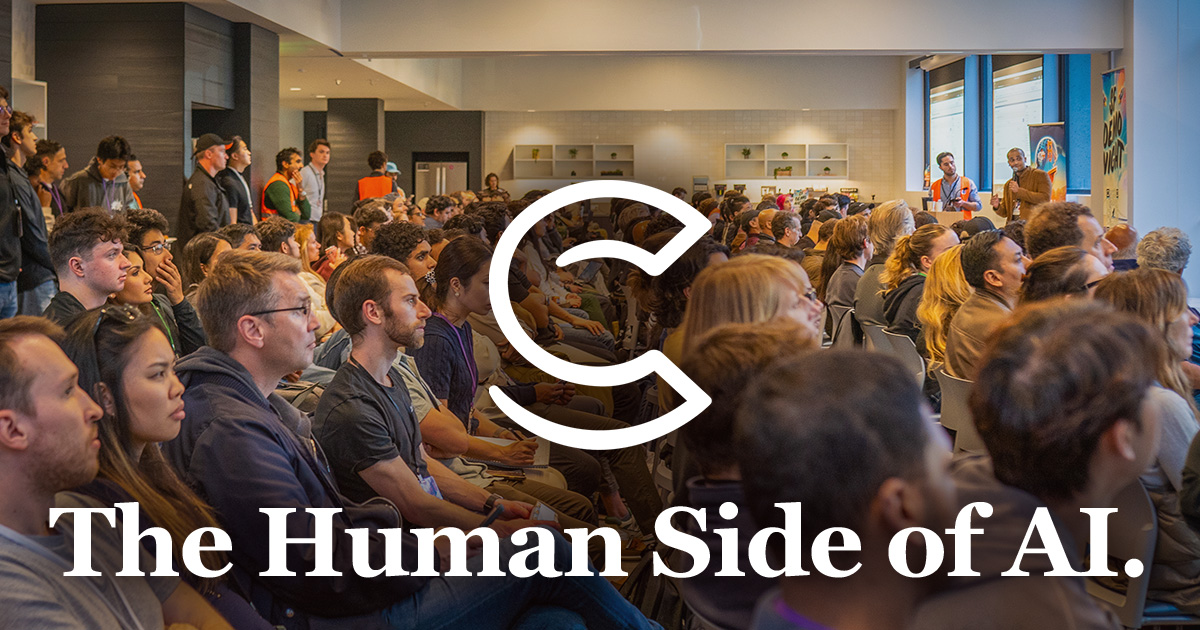
The AI Collective is a community of volunteers, made for volunteers. All proceeds directly fund future initiatives that benefit this community.
Before You Go…
💬 Join Slack: The AI Collective
🧑💼 LinkedIn: The AI Collective
𝕏 Twitter / X: @AICollectiveCo
📸 Instagram: @AICollectiveCo
Get Involved in Your Community
Thank you to the thousands of volunteers around the world who make this work possible. We truly could not do this without you.

About Noah Frank
Noah is a researcher, innovation strategist, and ex-founder thinking and writing about the future of AI. His work and body of research explores the economics of emerging technology and organizational strategy.

About Joy Dong
Joy is a news editor, writer, and entrepreneur at the forefront of the emerging tech landscape. A former educator turned media strategist, she currently writes TEA, where she demystifies complex systems to make AI and blockchain accessible for all.

About Chappy Asel
Chappy Asel is a serial entrepreneur and builder. Founder and Chairman of The AI Collective, he previously worked on Vision Pro and early Apple Intelligence at Apple, and supports founders as a venture fellow, scout, and advisor.