
It's Monday, July 13th: Sam Altman got GPT-5.6 through a White House review and was sued by Apple and called a thief by Elon Musk within 48 hours, while Zuckerberg broke a three-year silence on X to put a price tag on a Meta model for the first time.
FREE LIVE WEBINAR
💭 Free Live Webinar: The True Cost of Intelligence. Calculating ROI in the Agentic Growth Era

Everyone's shipping agents. Way fewer people can tell you what a token actually costs them per active user, or whether the intelligence is paying for itself.
We're getting into the real math of running agentic products at scale: token economics, unit costs, and how to tie AI spend back to engagement and revenue instead of guessing.
Hear from speakers who’ve operated at massive scale:
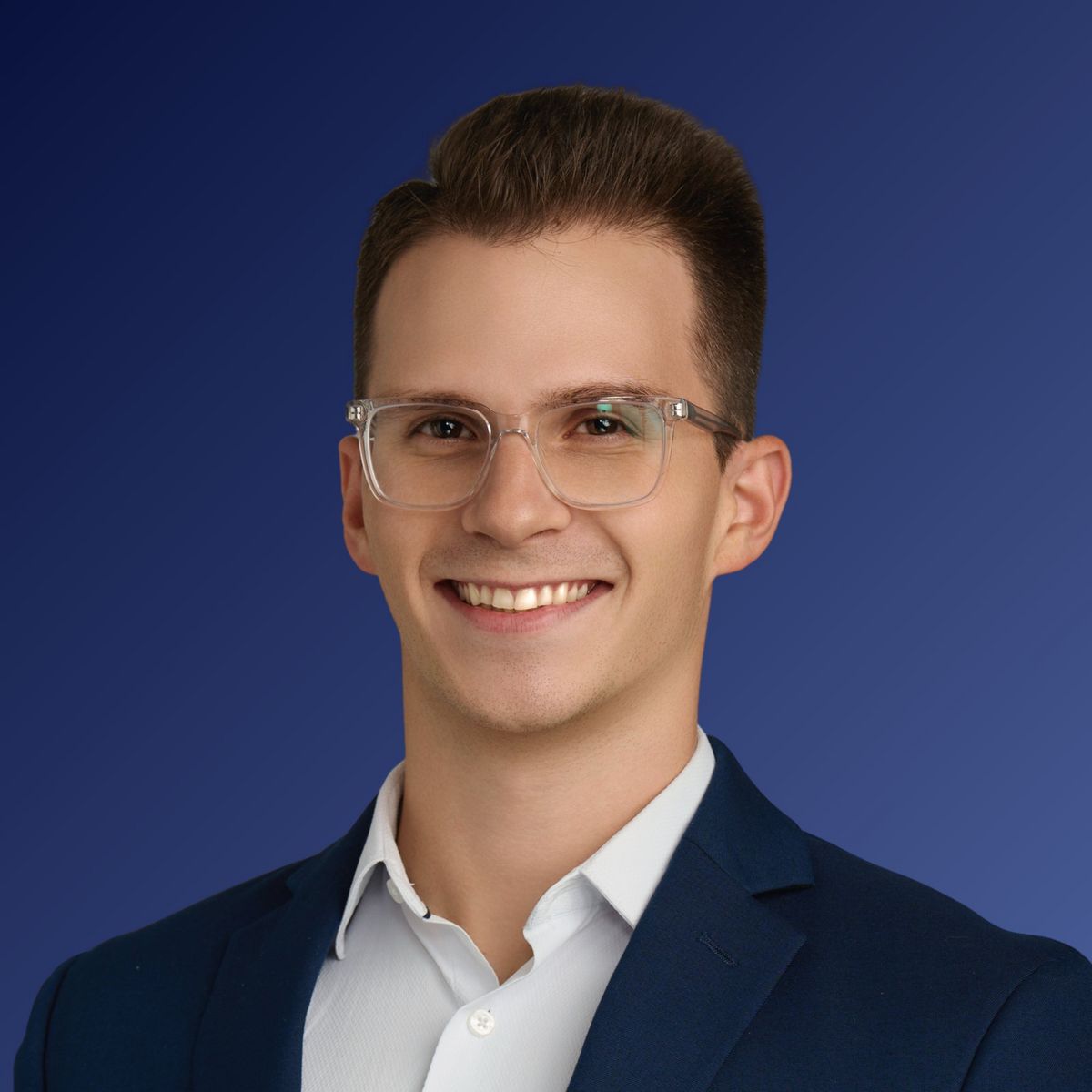
Daniel Usedom, GTM at ThinkingAI
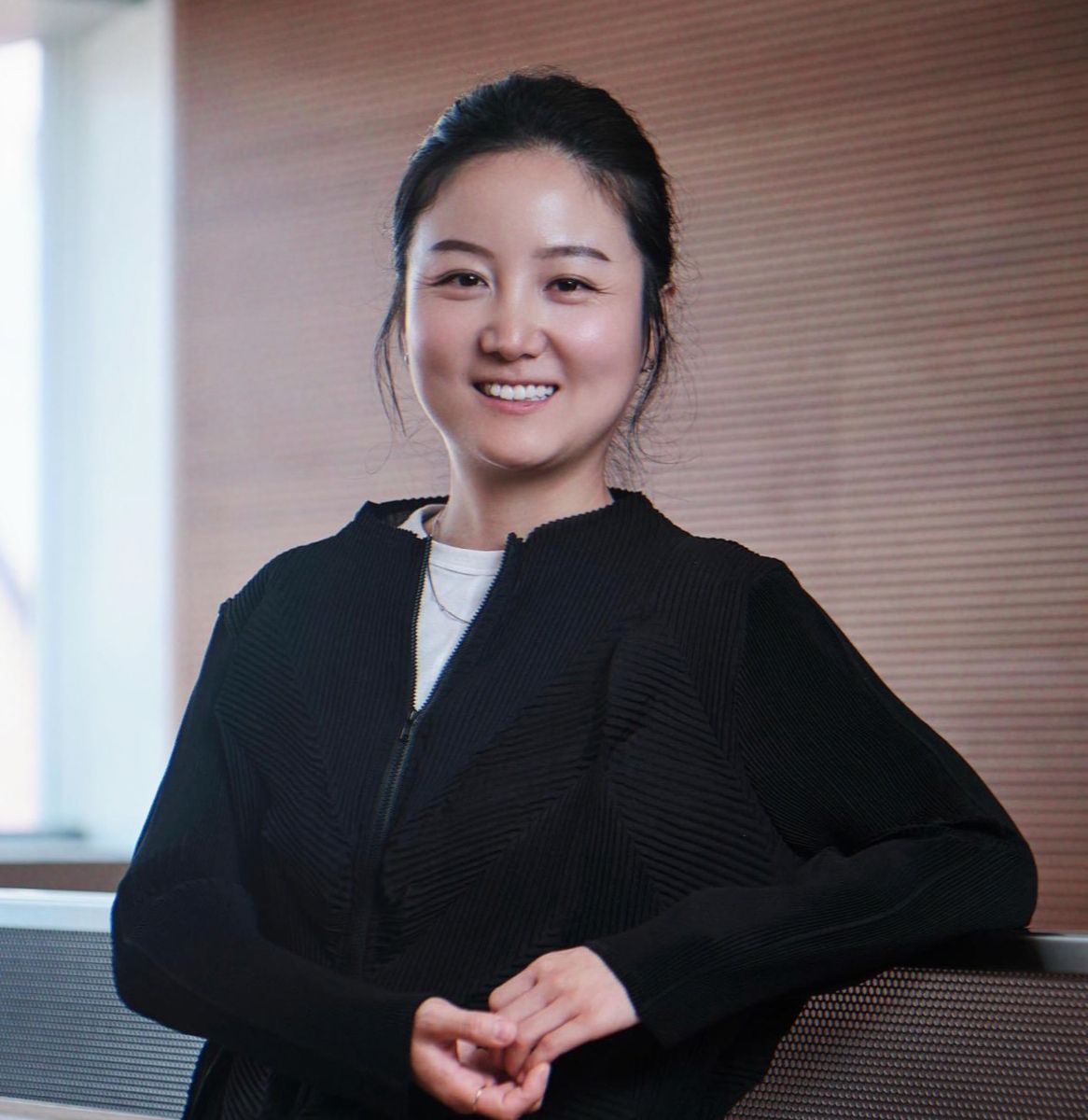
David Pan, Director of Biz Dev at Habby (the studio behind Archero and Survivor.io, hundreds of millions of downloads)
Jack Xie, Principal AI Infra Engineer and Launch Technical Lead for League of Legends and MARVEL Snap CN (two of the biggest live-service games on the planet)
📅 July 15, 10:00 AM PST.
RSVP and grab your spot now!

Covering what’s happening on the ground in AI, every Monday.
1️⃣ CROSSFIRE: OpenAI Got Its Model Cleared by the White House. Then Apple Sued and Musk Called Altman a Thief.

Image from Techcrunch
Sam Altman spent 12 days negotiating GPT-5.6 through a White House review. He got it out on July 9. Within 48 hours, Apple sued OpenAI for trade secret theft and Elon Musk was on X suggesting he belongs in prison.
GPT-5.6 arrived as three models, Sol, Terra, and Luna, priced from $1 to $5 per million input tokens, after clearing a 12-day US government pre-release review under Trump's June executive order. OpenAI complied, and put its objection on the record: "We don't believe this kind of government access process should become the long-term default."
One day later, Apple sued OpenAI in the Northern District of California, alleging that hardware chief Tang Tan told Apple engineers interviewing at OpenAI to bring "actual parts" to show-and-tell sessions and coached departing staff on evading Apple's security procedures, and that former engineer Chang Liu kept his Apple laptop and used it to download confidential technical documents.
The complaint says the theft ran "at every level, from members of its Technical Staff to its Chief Hardware Officer," and notes that more than 400 former Apple employees now work at OpenAI.
OpenAI denied it, with spokesperson Drew Pusateri saying "we have no interest in other companies' trade secrets."
Elon Musk, whose SpaceXAI shipped the rival Grok 4.5 the day before GPT-5.6, posted that Altman had “stole[n] all of Apple's phone technology!” Altman fired back that the surest sign GPT-5.6 leads is "that elon is obsessed with me again" and told Musk "you're the one selling public market investors on short-term space datacenters." Musk: "We start flying them next year. Maybe you can come see them if your parole officer approves."
The model is the story the feud is burying. Sol matches Claude Mythos preview on coding while using a third of the output tokens, and ChatGPT Work now runs multi-step jobs unsupervised. The thing to watch is whether Apple's suit slows OpenAI's enterprise push ahead of its IPO, or whether it's just noise.
2️⃣ SILENCE BROKEN: Meta Put a Price on a Model for the First Time, and Zuckerberg Went to X to Sell It.

Image from TechCrunch
Meta released Muse Spark 1.1 on July 9 and, for the first time, put a price on one of its models, and Mark Zuckerberg announced it with his first post on Elon Musk's X in three years.
Muse Spark 1.1 is Meta's first paid model API, priced at $1.25 in and $4.25 out per million tokens, roughly a quarter of Anthropic's and OpenAI's flagship rates, with $20 in free credits and a US-only public preview.
Built by Meta Superintelligence Labs under Alexandr Wang, it offers a 1M-token context window, agentic coding, and computer use across desktop, mobile, and browser, and scored 69 on the independent Artificial Analysis Coding Agent Index, ahead of Claude Opus 4.8 and just behind GPT-5.5.
The paid API marks a sharp turn from Meta's open-weights Llama strategy, though it stays free to consumers through Thinking mode in the Meta AI app.
Zuckerberg unveiled it from his personal handle on X, his first post there since a 2023 Threads-launch meme; it drew more than 12 million views, dwarfing his own Threads cross-post, and Musk, whose SpaceXAI shipped Grok 4.5 the day before, simply replied "Jinx."
Meta charging for tokens is the signal that matters: with up to $145 billion in 2026 AI infrastructure spend, the free-Llama era is bending toward a monetization push aimed straight at OpenAI's and Anthropic's pricing. The low rates make Muse Spark worth a test for agentic coding, just know the weights are closed, and the launch venue told you exactly who Meta wants using it.
📰 Other Headlines
STATEHOUSE FIRST: Pritzker signed a law on July 6 making Illinois the first state to mandate independent third-party audits of large frontier AI developers, those over $500 million in revenue, with 72-hour critical incident reporting for frontier developers generally. Takes effect January 1, 2027.
POWER PLAY: Anthropic signed a 20-year, $19 billion data center lease with TeraWulf for a 401MW AI campus in Hawesville, Kentucky.
KNOW THYSELF: Anthropic shipped Reflect, a dashboard that shows Free, Pro, and Max users their own Claude habits, quiet hours, and break reminders.
TALK OVER ME: OpenAI released full-duplex GPT-Live voice models that speak and listen at once, with the mini version replacing Advanced Voice Mode for all users.
COOKIE STUFFING: Phia, the AI shopping app co-founded by Phoebe Gates, was accused of "cookie stuffing", overwriting other publishers' affiliate codes to take commission on sales it didn't drive. Phia called it a bug. Impact.com suspended it.
BROWSER RETREAT: OpenAI is shutting down its Atlas browser and folding agentic browsing into the ChatGPT desktop app and a new Chrome extension.
ROBOT EYES: Mistral launched Robostral Navigate, an 8B model that steers robots through complex spaces using a single RGB camera and plain-language instructions.
RECORD DEBUT: SK Hynix, the memory supplier for Nvidia's Blackwell chips, raised $26.5 billion in the largest foreign IPO in US history and closed its debut up about 13%.
FED HIRE: The Federal Reserve named Marc Andreessen to co-lead a new AI productivity and jobs task force, with recommendations due by the end of 2026.

Your breakdown of what’s happening in AI this week, from Noah Frank ⚡️
🔦 Spotlight On: A Day at NYU’s AI and the Workforce Conference

A fashionably purple banner for a fashionable crew.
On Friday, I had the pleasure of spending a full day with economists talking about AI. What fun! No seriously... I'm a nerd for this stuff and even I was left speechless. NYU's Rob Seamans and team did an excellent job organizing.
Here's my read on the state of the AI and economics discussion.
Exposure still has an outsized influence on discussions, despite the heterogeneous effects. Martha Gimbel of the Yale Budget Lab pointed out numerous times that exposure on its own doesn't mean much. It isn't a probability of automation, the leading measures disagree with each other, and the workers who score as exposed differ from everyone else in ways that have nothing to do with AI, more college educated, more female, less sensitive to the business cycle. Yet other players in the space keep coming back to exposure, trying to assign it some kind of significance that the people who build these measures explicitly disclaim.
The aggregate numbers are still a bunch of zeros. That's Gimbel's own cheerful description of her results. Occupational churn looks elevated if you start measuring at ChatGPT's release, and exactly as elevated from any other starting month, because the labor market is also digesting a pandemic recovery, immigration swings, and an aging workforce. The non-zeros don't survive scrutiny.
Management is underemphasized, and people are just beginning to think about it. PwC described the seniorization of entry-level jobs, with new graduates asked to lead sooner and exercise judgment faster, and Accenture expects agents to absorb much of middle management's coordination work once its tacit knowledge gets codified. The middle of the org chart is where the next wave hits, and almost nobody is measuring it.
Not just tasks/jobs, but careers are becoming a unit of analysis. What does it look like for somebody to advance? Gregor Schubert of UCLA presented new work showing upward mobility for junior and mid-level workers has dropped sharply since ChatGPT even where employment holds steady, a wall in the middle of the career ladder. Seniors keep circulating among senior roles while juniors stop getting promoted past a certain point, partly because the premium on judgment is rising and firms would rather hire experience than develop it. Questions like these push hard on the task-based model of how we think about jobs in the age of AI.
There's still a pretty significant gap between the economists and the technologists. Tom Cunningham's Forecasts of AI & Economic Growth makes this acute and clear. Economists cluster at the low end of growth forecasts, technologists at the high end, and the disagreement is less about economics than about whether AI capabilities keep improving, which many economist forecasts quietly assume they won't.
Everyone is hungry for statistics on adoption rather than another round of exposure scores. Bharat Chandar walked through this well. His Canaries work with ADP payroll records now runs through April 2026 with a live dashboard, he is careful to call the entry-level divergence descriptive rather than causal, and his controls cut the headline estimate roughly in half. Large swaths of the economy count as "exposed," while studies of actual adoption, Humlum and Vestergaard (2025) among others, keep finding largely null effects on employment. Friday's newest results, built on corporate spending records showing who really pays for AI, even leaned positive. What AI could do keeps proving a weak guide to what it does.
As we think about the future of work, how are we moving through this?
Economists are spending a lot of time on current and lagging indicators, and I left more convinced that the real story is organizational change, how firms rebundle work, decide who to promote, and figure out what juniors are for. The future is not evenly distributed, but it also isn't guaranteed to look anything like the past. That's where the benefits of community and gatherings like this come together. I came away really loving what this group is working on. Thanks so much for having me!
🫵 Want your message in front of 200,000 AI builders?
Our partners and sponsors get exclusive placements across the newsletter and access to AIC's in-person network — demo nights, dinners, hackathons, and forums across 180+ chapters.
For all inquiries, send us a note at [email protected].
The AI Collective is built by volunteers across 180+ chapters in 40 countries.
Thank you to the thousands of volunteers around the world who make this work possible. We truly could not do this without you.
🧑💻 About the Editors

About Noah Frank
Noah is a researcher, innovation strategist, and ex-founder thinking and writing about the future of AI and the workforce. His work and body of research explores the economics of emerging technology and organizational strategy. Outside of AIC, Noah heads research for Centaurian AI.

About Joy Dong
Joy is a news editor, writer, and entrepreneur at the intersection of AI and blockchain. Whether she is demystifying complex systems in her newsletter, TEA, or building streamlined solutions through her automation agency, Ownly, Joy’s mission is to make emerging tech accessible and actionable for everyone.

About Lindsay Gross
Lindsay is an AI engineer, researcher, and writer focused on how AI systems behave in practice and what it takes to make them safe. Her work sits at the intersection of AI safety, governance, and product design, and at AIC she writes about the questions that matter most as these systems scale.