

It's Wednesday, November 18th. OpenAI launched ChatGPT for Sales, which brings your CRM and more than 30 partner plugins into the chat, and Microsoft opened Copilot Workspaces, a shared space where people and their agents work toward one goal. Plus a simple way to verify your agents' work before you trust it.

In Today’s Top Tools, we spotlight some of the most innovative, creative AI apps that we recommend adding to your stack.
TOOL SPOTLIGHT
1️⃣ ChatGPT For Sales Puts Your Tools And Customer Context In One Place
Image from OpenAI
ChatGPT for Sales is a new experience for sales teams, with a Sales plugin and more than 30 partner plugins. Business and Enterprise admins can enable it. Availability varies by plan, region, and workspace settings.
OpenAI announced ChatGPT for Sales on November 17 in an official ChatGPT post. It is meant to help sellers prepare for calls, tailor proposals, and follow up faster using tools they already use.
Install the Sales plugin to get ready-to-use workflows for deciding which accounts to pursue, preparing for a call, and drafting a follow-up.
Connect account context from tools such as Salesforce, HubSpot, or monday CRM to brief a meeting and plan next steps.
ChatGPT for Sales can be turned on by Business and Enterprise admins in the Admin Console, under Plugins. Partner plugins and features vary by plan, region, and workspace settings. OpenAI also released GPT-6.2 Astra and Sol the same day, for Plus, Pro, Enterprise, and Edu users in ChatGPT Work and Codex, and in the API.
The useful first test is a deal you already have in your CRM. Connect one system, ask for a call brief, and see whether the customer context is accurate enough to send. Keep a human review on follow-ups and record updates. If you are on a Business or Enterprise workspace, ask an admin whether the Sales plugin is enabled before you plan a rollout.
TOOL SPOTLIGHT
2️⃣ Copilot Workspaces Lets People And Agents Share One Goal
Image from Satya Nadella's Ignite thread
Copilot Workspaces is a shared space in the Microsoft Copilot app where people and agents work toward one goal with shared context. It is the next version of Copilot Notebooks, and the work carries over into Teams. It is available now through Frontier, Microsoft's early-access program.
Microsoft CEO Satya Nadella announced a set of Ignite releases on November 17, starting with Copilot Workspaces. The official recap is on Microsoft's Ignite live news page.
Use Copilot Workspaces in the Microsoft Copilot app so a team and its agents can share context toward one goal.
Review Agent 365 Business Analytics to connect AI spend to outcomes; Nadella describes it as an ERP system for AI.
Run HorizonDB, now generally available in Azure; Microsoft says it can deliver up to 8 times the performance of self-managed Postgres.
Copilot Workspaces and Agent 365 Business Analytics are in Frontier, according to Microsoft's official Copilot blog, and Business Analytics needs at least one Microsoft 365 Copilot license. Bringing a personal Autopilot into Workspaces is coming soon. HorizonDB and Microsoft Perception, a security system that coordinates red, blue, and green agents, are generally available.
The decision this week is which of these announcements you can actually try. HorizonDB and Perception are generally available today, while Workspaces needs Frontier access, so confirm it in your tenant before you plan around it. Start with one shared project in the Copilot app, and keep a person in the loop for anything that changes a customer record or a production system.
🎓AIC AUTOMATIONS
✅ How Do I Verify My Agents' Work?
On Monday, Addy Osmani published how the Claude Code team thinks about verification. The job, he writes, is "defining what 'done' looks like and reviewing the evidence." In Anthropic's internal tests, a separate grader with a rubric raised task success by up to 10 points.
That is how I check my own agents. I write a fixed eval for each one, then I review the evidence before I call the work done.
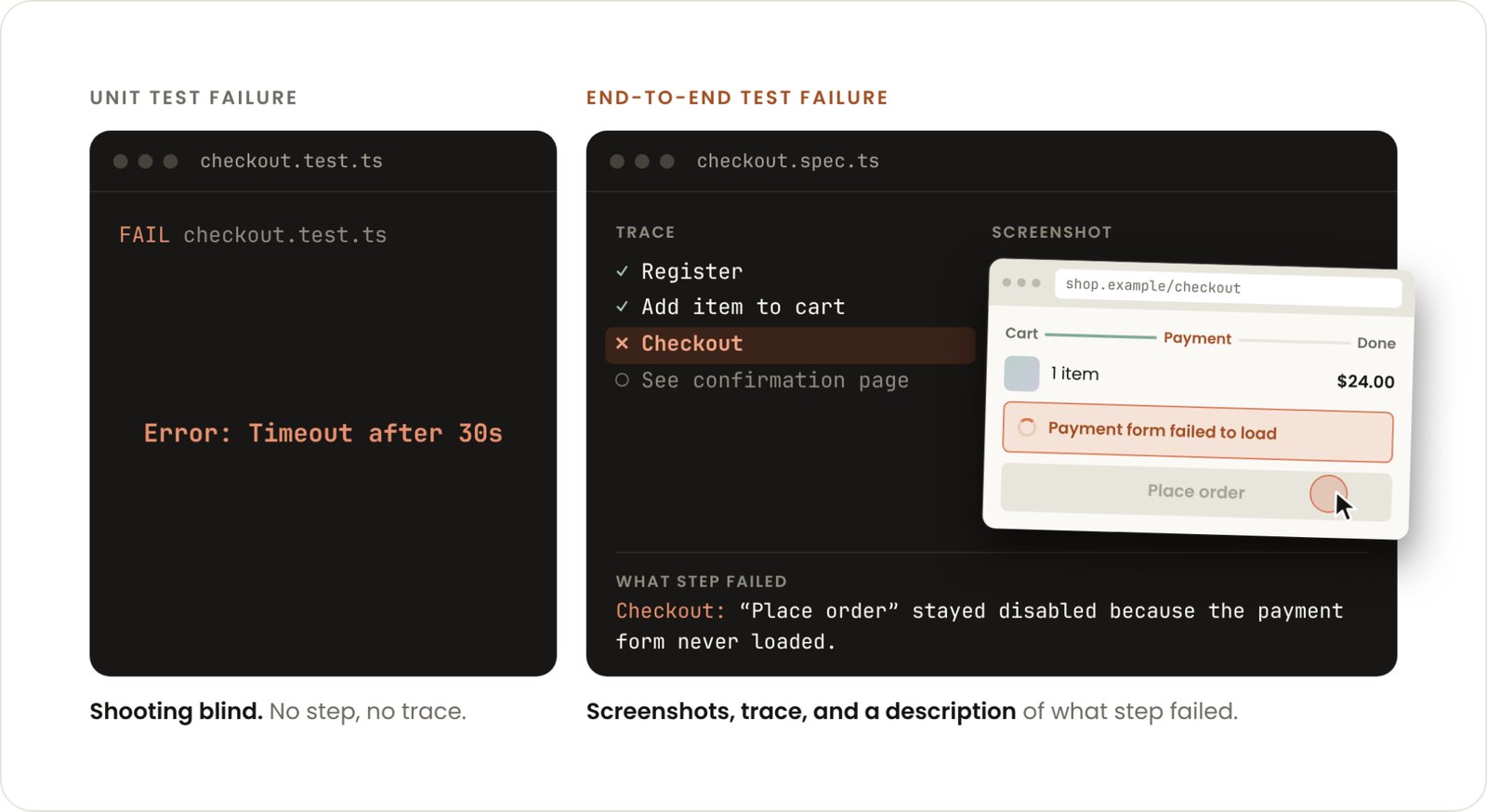
Figure from Addy Osmani, How the Claude Code team thinks about verification. On the left, a unit test that only reports a timeout. On the right, an end-to-end test that shows the failed step.
For a live English-Mandarin interpreter that I built, the evals were latency and accuracy. The bar was a translation within 1.5 seconds. The first run took about 2 seconds; after I reran the same test, the median was 1.30 seconds.
For a news companion that ranks stories for me, my reading behavior gradually becomes the eval. What I read, label, and pick as top stories becomes the answer key the ranker is checked against.
In both cases, nothing counts as done until it clears a fixed bar and I have evidence I can review. Paste this in and fill in the brackets.
I'm building [workflow]. Write a success
bar and a fixed test set for
[e.g. latency, accuracy].

After every change, run the same test set.
Use a separate grader with a frozen
rubric. Do not edit the rubric.
If a check still fails after 3 repair
rounds, stop and bring me the evidence.
Do not lower the bar to pass.
I will edit and lock the bar first.
Alperen Keles offers an honest limit: a passing test only covers the properties you wrote down.
One way to put AI to work, every week. From Joy Dong
🎙️ Catch The AI Collective Podcast, Live Every Weekday
Join hosts AJ Green and Catherine McMillan live at 9 AM PT every weekday for the AI news that matters, what's happening across The AI Collective, and conversations with the people building the field.

In this section, we feature a few standout opportunities at leading AI companies, non-profits, policy groups, and other organizations.
🔬 Work at a Lab/AI Safety
Roles at frontier labs, safety organizations, and research institutions
RESEARCH ENGINEER, CYBERSECURITY RL - Anthropic | San Francisco, CA or New York City, NY | $500,000-$850,000 USD annual
RESEARCH ENGINEER, CONTENT UNDERSTANDING - Exa | San Francisco, CA | $180,000-$350,000
SENIOR/STAFF SYSTEM RESEARCH ENGINEER, LLM INFERENCE OPTIMIZATION - Snowflake | Bellevue, WA | $236,000-$330,000
🚀 Work in Industry
Roles at funded AI startups and private companies
STAFF PRODUCT MANAGER, AI & DATA FOUNDATIONS - Plaid | San Francisco, CA | $207,600-$339,600 + Equity
SENIOR MACHINE LEARNING ENGINEER (CLINICAL TEAM) - Midjourney | San Francisco Bay Area (Hybrid) | Estimated base salary $237,000-$250,000
FORWARD DEPLOYED STRATEGIST - Magic | New York City | $100,000-$150,000 + Equity
🏛️ Work in AI Policy / Governance
Roles in government, think tanks, NGOs, and policy organizations
US EXECUTIVE BRANCH POLICY & INTERNATIONAL ENGAGEMENT LEAD - Scale AI | Washington, DC | $148,000-$185,000
POLICY ANALYST / SENIOR POLICY ANALYST - AI Policy Network | Washington, DC | $80,000-$135,000 (Policy Analyst); $140,000-$190,000 (Senior Policy Analyst)
POLICY COUNSEL / ASSOCIATE POLICY COUNSEL - Encode AI | Washington, DC (Hybrid) | $130,000-$235,000 depending on level and experience
🫵 Want your message in front of 500,000 AI builders?
Our partners and sponsors get exclusive placements across the newsletter and access to AIC's in-person network: demo nights, dinners, hackathons, and forums across 180+ chapters.
For all inquiries, send us a note at [email protected].
The AI Collective is built by volunteers across 180+ chapters in 40+ countries.
Thank you to the thousands of volunteers around the world who make this work possible. We truly could not do this without you.
🧑💻 About the Editors

About Joy Dong
Joy is a news editor, writer, and entrepreneur at the intersection of AI and blockchain. Whether she is demystifying complex systems in her newsletter, TEA, or building streamlined solutions through her automation agency, Ownly, Joy’s mission is to make emerging tech accessible and actionable for everyone.

About Lindsay Gross
Lindsay is an AI engineer, researcher, and writer focused on how AI systems behave in practice and what it takes to make them safe. Her work sits at the intersection of AI safety, governance, and product design. At AIC and in her newsletter, Hidden Layer, she writes about the questions that matter most as these systems scale.
