In partnership with

It's Monday, May 4th: MoonPay just gave AI agents a Mastercard, and Elon Musk testified under oath that xAI trained Grok on OpenAI's models. Plus, we show off the upcoming launch to Humans in AI Week.
🚀 Humans in AI Week: Our Biggest Bet Yet.

This June, The AI Collective is hosting the world's largest human-centered AI gathering in history. 100+ events. One week. All of it focused on one central question "what does it mean to be human in the AI era?".
Whether you joined us yesterday or you've been with us since the very beginning — every chapter opened, every event hosted, every conversation had — it's all been leading here. We believe that everyone deserves a seat at the table in this conversation, and we want YOU to be a part of it.
Pledge now to share your voice, and keep an eye out for a Humans in AI Week event near you!
For the full story, read our official announcement and pledge your voice using the link below.

Head over to our Events Portal to get the latest on upcoming AI Collective events near you. Search by city, date, or event format, and join thousands of builders at events across 180+ chapters on every continent (except Antarctica, for now).
Find an event in your city using the link below.👇

The top AI stories from last week, filtered for what will help you stay in the know.
1️⃣ AGENT PAYMENTS: MoonPay Hands AI Agents a Mastercard

MoonPay launched MoonAgents Card on May 1, a virtual Mastercard debit product that lets AI agents spend stablecoins directly from a self-custodial onchain wallet. Issued through a partnership with Monavate and Exodus, the card is live today in the UK and Latin America via the MoonPay CLI, with US and EU rollouts planned for the coming months.
The card converts stablecoins to fiat at the point of purchase, so agents never have to pre-load a custodial float. Private keys stay with the user. For each transaction, the wallet signs a smart-contract approval that grants Monavate access to a single purchase only, executed in real time against the Mastercard network. If a merchant declines, funds return immediately. Permissions are delegated approvals the human sets once during KYC and can revoke at any time.
Solana is the launch network and USDC the named stablecoin; onramps are zero-fee, and developers can issue a card with a single CLI command from MoonPay's developer kit, which has now processed more than 4 million tool calls, with the first million taking 30 days and the second taking 7. The launch sits on top of MoonPay's Open Wallet Standard, a cross-chain framework backed by more than 15 organizations including the Ethereum Foundation, Solana Foundation, PayPal, and Ledger.
Agentic commerce until last week lived inside walled gardens, with Stripe issuing cards for autonomous workflows and OpenAI and Anthropic gating tool calls inside their own platforms. MoonAgents Card breaks that pattern by handing agents a credential that works at any merchant on the Mastercard network with no integration required on the merchant side. For builders, the operational change is concrete. An agent that buys a domain, books a flight, or renews a subscription no longer needs a human in the loop to top up a card.
For founders, the launch pulls forward thornier questions about audit trails, fraud liability, and KYC ownership when a non-human is the spender of record. The fact that custody never leaves the user's wallet is the part regulators will care about most.
2️⃣ MODEL DISTILLATION: Musk Says xAI Trained Grok on OpenAI Models

Elon Musk testified in California federal court on April 30 that xAI used distillation techniques on OpenAI's models to train Grok. Asked directly whether xAI distilled OpenAI's models, Musk answered "Partly," and called the technique "a general practice among AI companies." The admission landed inside Musk's own lawsuit against OpenAI, Sam Altman, and Greg Brockman over the lab's shift from nonprofit to for-profit structure.
Distillation lets a smaller model learn by mimicking the outputs of a larger one, usually through API calls or scraped responses, and produces a near-equivalent model at a fraction of the training cost. The technique sits in a legal gray zone. It isn't explicitly illegal, but it likely violates the terms of service of every major frontier lab.
Musk also offered an unforced ranking of AI providers under oath: Anthropic first, OpenAI second, Google third, with Chinese open-weight models behind those. xAI was founded in 2023, years after OpenAI, and Musk noted the company runs on "just a few hundred employees." OpenAI did not respond to TechCrunch's request for comment on the admission.
The testimony lands at an awkward moment for the industry's distillation debate. Frontier labs spent the past year building defenses through the Frontier Model Forum against distillation by Chinese open-weight competitors like DeepSeek, framing the practice as IP theft. Musk's "Partly" turns that frame inward. If the second-most-valuable AI company in the country quietly used the technique on the lab it now sues, the moral case against DeepSeek and others gets harder to argue without inviting the same scrutiny at home.
For builders, the practical signal is that distillation is now confirmed mainstream, not an outlier tactic. Any frontier lab serious about defending its models has to invest in detection at the API layer rather than relying on terms of service alone. The legal exposure cuts both ways. xAI's admission gives OpenAI a counter-claim it didn't have a week ago, even as Musk's underlying suit accuses OpenAI of betraying its founding mission.
🔗 Other News
PARTNERSHIP RESHUFFLE: Microsoft and OpenAI restructured their seven-year deal, ending Azure exclusivity and letting OpenAI serve customers across any cloud while Microsoft keeps a non-exclusive IP license through 2032.
RECORD SEED: Former DeepMind reinforcement-learning chief David Silver's stealth UK lab Ineffable Intelligence broke out with a $1.1B seed at a $5.1B valuation co-led by Sequoia and Lightspeed to build an AlphaZero-style "superlearner."
DEAL BLOCKED: China's NDRC forced Meta to unwind its $2B acquisition of Manus, the Singapore-headquartered agentic AI startup founded by Chinese engineers, after a months-long export-control probe.
CLOUD LANDING: AWS put GPT-5.5, Codex, and OpenAI-powered Managed Agents on Amazon Bedrock in limited preview, the first time OpenAI's frontier stack ships on a non-Microsoft cloud.
EARNINGS: Microsoft posted Q3 FY26 with Azure up 40% and an AI business at a $37B annual run rate, up 123% YoY, on $82.9B in total revenue.
AGENT INFRA: Parag Agrawal's Parallel Web Systems raised a $100M Series B at a $2B valuation, led by Sequoia, to scale its web-search and grounding APIs for AI agents (customers include Notion, Harvey, Clay, Opendoor).
AGENT SECURITY M&A: Palo Alto Networks agreed to acquire Portkey, the AI gateway processing trillions of tokens per month, folding it into Prisma AIRS as the control plane for autonomous agents in the enterprise.
MODEL LAUNCH: Mistral shipped Medium 3.5, a 128B dense model with a 256K context window scoring 77.6% on SWE-Bench Verified, alongside cloud-based Vibe remote coding agents and a new Work Mode in Le Chat.
PENTAGON SHUTOUT: The Pentagon signed seven AI vendors for IL6 and IL7 classified networks including SpaceX, OpenAI, Google, NVIDIA, Reflection, Microsoft, and AWS, while Anthropic stays on the supply-chain risk list over its refusal to permit autonomous-weapons or mass-surveillance use.

Your pulse on the biggest events and announcements and happening in AI this week, from Noah Frank ⚡️
📅 Events We’re Watching
Mark your calendars and be sure to sign up for these landmark events we’re watching. Be sure to look out for special AIC discounts where available.
May 4 – 7: IBM Think 2026 (Boston, Massachusetts)
IBM's flagship technology conference, covering enterprise AI, cloud computing, and quantum. Heavy on real-world implementation and use cases across industries like healthcare, finance, and supply chain.
May 27 – 28: AI DevSummit 2026 (South San Francisco, California)
A two-day conference on shipping real-world AI, with tracks on management, machine learning, and enterprise integration. Speakers include Logan Ramalingam (Google Cloud), Kordel France (Toyota), and AIC’s very own Mary Grygleski! Registration starts at $1,080.
June 15 – 18: Databricks Data + AI Summit 2026 (San Francisco, California)
The leading event at the intersection of data engineering, machine learning, and AI, hosted by Databricks. In-person passes run $1,395 to $1,895, but virtual access is free. If you can only attend one event this summer, this is a strong pick.
Your help center, powered by Mintlify

Mintlify raised a $45M Series B at a $500M valuation, led by a16z and Salesforce Ventures, with participation from Bain Capital Ventures, Y Combinator, and DST Global.
We power documentation for 20,000+ companies including Microsoft, Anthropic, Coinbase, and PayPal, reaching over 100 million people every year.
Over 50% of traffic across our customer base is now AI agents, not humans. Agents don't browse documentation, they reason and act on it. If that knowledge is incomplete or poorly structured, your product becomes invisible to AI entirely.
Three capabilities leading the way:
Workflows — always-on automation to keep docs accurate.
MCP support — connect your knowledge directly to external agents.
AI agent — write and update content based on prompts.
🫵 Do You Belong on Our Newsletter?
Share your message with the world’s largest AI community. To inquire about partnership availability, reach out to our team below.
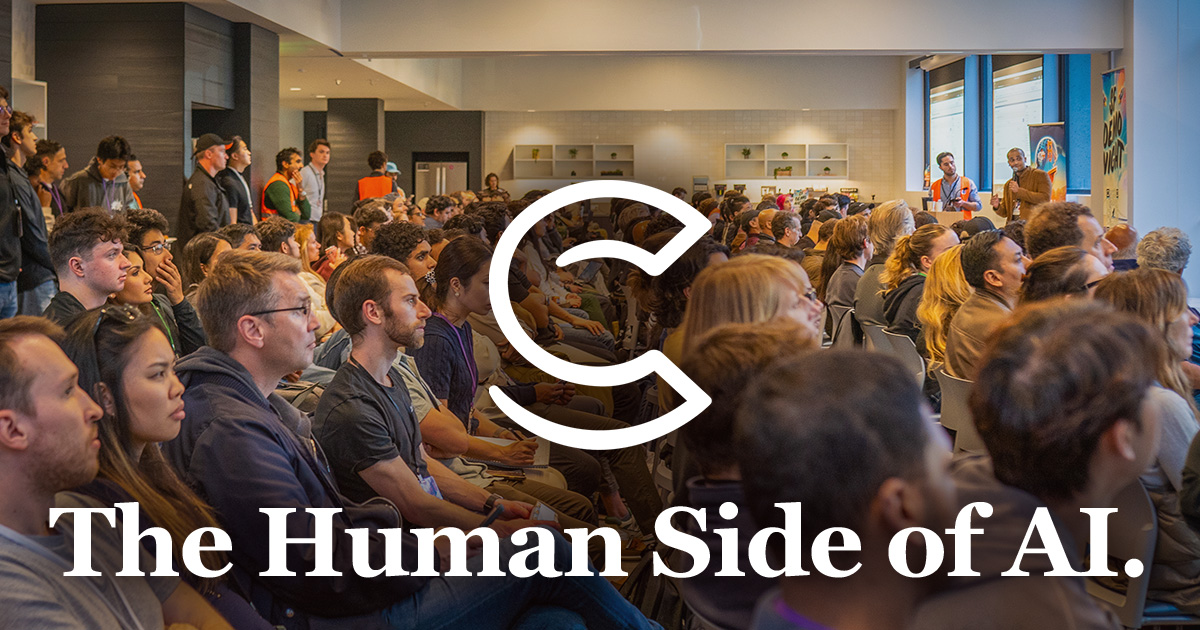
The AI Collective is a community of volunteers, made for volunteers. All proceeds directly fund future initiatives that benefit this community.
Before You Go…
💬 Join Slack: The AI Collective
🧑💼 LinkedIn: The AI Collective
𝕏 Twitter / X: @AICollectiveCo
📸 Instagram: @AICollectiveCo
Get Involved in Your Community
Thank you to the thousands of volunteers around the world who make this work possible. We truly could not do this without you.

About Noah Frank
Noah is a researcher, innovation strategist, and ex-founder thinking and writing about the future of AI. His work and body of research explores the economics of emerging technology and organizational strategy.

About Joy Dong
Joy is a news editor, writer, and entrepreneur at the forefront of the emerging tech landscape. A former educator turned media strategist, she currently writes TEA, where she demystifies complex systems to make AI and blockchain accessible for all.